


At 10:43 on Thursday night, somebody in America sat down, opened a betting app, and put $19 on Katie Zacharia becoming the next White House press secretary.
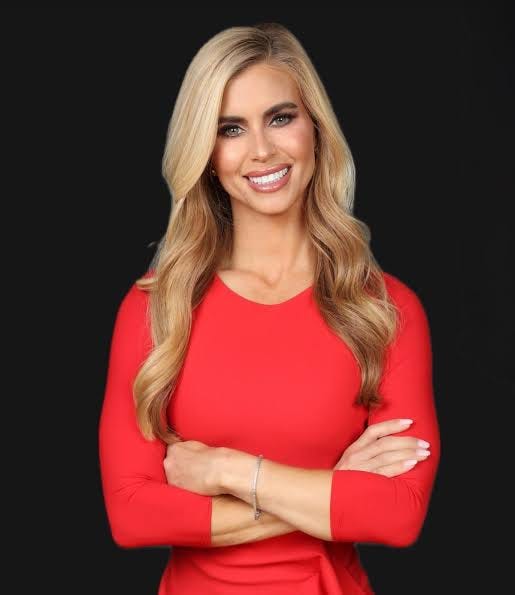
The market had her at about one percent, which in prediction-market terms means the crowd had considered her and moved on, the way a crowd at an airport moves on from a man holding a sign for someone who has clearly already landed. The bet stood to pay $1,896. On Friday at 1:41 in the afternoon, two more bets arrived, of $74 and $80, with the odds now at about two percent. Less than twenty minutes later, news outlets reported that Zacharia had the job, and that afternoon the president confirmed it on Truth Social. The three wagers will return about $9,600 between them. Kalshi, the company that took the bets, has told the Wall Street Journal it is investigating, and then declined to say anything else, which is what investigating sounds like from the outside.
Scholars have long wondered what a person would do if they knew the future, and the answer, it turns out, is put $19 on it.
For readers who have been spending their time on something else, Kalshi is a website where Americans bet on the news. It was created because watching the news had stopped being stressful enough on its own, and because the Commodity Futures Trading Commission, which regulates it, decided that whether the president would say a particular word in a speech was a commodity, like wheat. You can bet on elections, on interest rates, on the weather, on who will be fired, and on whether a given official will attend a given event, which is a market that will become relevant shortly. The trades are anonymous to the public. They are visible to Kalshi, which keeps the names, and which has become, without anyone planning it, the most effective leak detector in Washington, because it is the only place where a leak is required to fill out a form.
The job in question had been empty since August, when Karoline Leavitt left, and for two months the executive branch had been handling the press the way you handle a smoke alarm with a broom. Zacharia was doing communications for Trump Media, the company that runs Truth Social, and was described by the president as “a devoted fan and member of MAGA!”, which is what the job listing says now. Before Friday the market had not seriously considered her. Markets are bad at Trump personnel decisions, because the decisions are made by one man, often at night, on the basis of who was on his television that day, and the market cannot see his television. What the market can see is three people who suddenly could.
The amounts are what give the thing its texture. A person who knows at 10:43 on a Thursday night what the president will announce on Friday afternoon is in possession of one of the few scarce goods left in the country. They could in principle have bet $1,900 and collected $190,000, assuming the market had that much to give, which it didn’t, because nobody else believed in her. They bet $19. Then, on Friday, with the announcement under twenty minutes away, someone bet $74, and someone, possibly the same someone, possibly a friend who had just been texted, bet $80, as if the two of them were standing at a vending machine deciding how badly they wanted chips. In total, advance knowledge of a senior White House appointment was priced at $173, which is less than the appointment’s first week of parking.
The usual explanation for small bets is that they avoid attention, which means the plan was to insider-trade quietly, at odds of up to 99 to 1, on the one website in the country whose entire security department exists to notice exactly that. It is the heist movie where the crew spends the whole film planning and then, on the night, takes the mints from the front desk.
Kalshi does notice. In the first quarter of this year it opened more than 150 insider-trading investigations, blocked more than 100 trades, and referred at least 20 cases to law enforcement, numbers which tell you either that the company is vigilant or that a prediction market attached to the Trump administration functions as a confession booth with a payout. In June it began requiring traders in what it calls high-risk markets to verify who they work for, which is the betting-app equivalent of a bartender asking whether you drove. The question on the form is, in effect, do you work for the people you are betting on, and the correct answer, for the only people who could reliably win, is yes.
The form was introduced for a reason, and the reason has a name, Gabriel Perez. Perez was the White House teleprompter operator, which means his job was to know, in advance, what the president was going to say, a thing that until Perez had been considered impossible by physicists. He read the speeches. Then he went on Kalshi and bet on which words would be in them. He made more than $100,000 before Kalshi’s surveillance team noticed, in March, that one account kept predicting the president’s vocabulary with a precision no political scientist has ever achieved. In August he agreed to hand back $107,539 and pay a $65,000 penalty. Karoline Leavitt, still in the building at the time, called it “deeply unfortunate and frankly a disgrace,” and he was placed on unpaid leave, which in a Trump White House is what you get for having been caught on the small side.
And then there is George Santos, who in February bet on Kalshi that he would not attend the State of the Union. This is a market in which George Santos possessed what lawyers call total information, since the question was whether George Santos would walk into a room, and he was George Santos. The day before the speech he posted “I’ll be in the gallery.” On the night, he posted from an airport that watching it on a terminal television “was not part of the plan! FML.” The plan, as far as anyone can reconstruct it, was to tell the public he was coming, bet that he wasn’t, and then not come, a sequence historians believe is the first recorded instance of a man insider-trading on his own body. Asked by NPR whether he even had a Kalshi account, Santos said, “I’m not saying yes, I’m not saying no.” He settled with the CFTC in July for $35,000, and at the end of August Kalshi banned him for life and fined him another $71,000, making a betting app the first institution in American life to tell George Santos he could never come back.
The House Oversight Committee, under James Comer, opened an investigation into insider trading on Kalshi and Polymarket in May. It is presumably still open, in the sense that a drawer is still open.
Against this backdrop the White House had already sent its staff a memo. The memo warned them against using nonpublic information for personal gain, and it was sent, per the Journal, after a series of well-timed bets tied to the Iran war, which is a sentence that should be read slowly. The staff had to be told, in writing, to stop betting on the war. The memo was evidently filed next to the ones about the hand sanitizer, and it has worked about as well, because here we are, with $173 riding on the press secretary and the White House declining to return the Journal’s call, which is the first duty of a press office and the one it was best at during the two months it didn’t have one.
I don’t know who placed the bets, and neither does anyone outside Kalshi and, presumably, the CFTC, which also hasn’t commented. The field is small. The president knew. Whoever he told knew. Whoever they told knew, and so did whoever was standing nearby on a Thursday night, which in this presidency has historically included paying club members. It is possible the Thursday bettor was simply a lunatic with a hunch, in which case they are the best political forecaster in the United States and should be given a column. It is less possible that the Friday bettors, at 1:41, were also lunatics with hunches, since the hunch would have had to arrive twenty minutes before the New York Times’s.
In any previous administration a $19 leak would have been the scandal of the week, and someone would have been walked out of the building in front of a camera. In this one it is a Saturday item, below the Nobel rant and above the execution livestream. The person who will be asked about it at the first briefing is Katie Zacharia, who did not place the bets and will now have to stand at a podium and explain why three strangers were more confident in her career than the rest of the country combined. She has four children under eleven. She has handled worse questions from shorter people.