


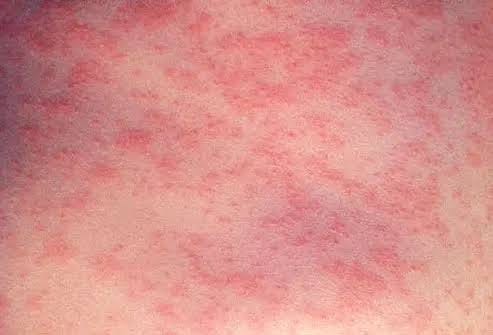
On Tuesday the Pan American Health Organization ruled that measles is endemic in the United States again. The country had been certified free of it since 2000. That status survived five presidents, a pandemic and two decades of anti-vaccine activism. It did not survive this administration’s second year.
Robert F. Kennedy Jr., the Secretary of Health and Human Services, responded with a post. He said the country will “work to regain U.S. measles elimination status.”
Work to regain it. From the man in charge when it was lost.
The numbers, since somebody should say them
More than 5,400 cases, in nearly every state. Before last year the country averaged about 180 a year, and most of those arrived on airplanes. This year only about 4 percent were imported. The rest we grew here.
Last year, 243 people were hospitalized. Three died. This year state health departments count ten dead: seven in Pennsylvania, two in Wisconsin, one in New York. The CDC’s count is six, and the reason it’s lower is that the CDC changed how it counts.
Researchers have confirmed 112 cases in pregnant women since the start of last year, and 13 babies born with it.
Ninety-six percent of this year’s cases were in people who were unvaccinated or whose status wasn’t known. Two doses of the vaccine are 97 percent effective. It has existed since 1963. It costs less than a tank of gas.
That’s the whole tragedy in four sentences. We had the cure for sixty years and a federal government that spent two of them hedging about whether to recommend it.
Who said what while it spread
Kennedy spent the first outbreak, in West Texas, talking up vitamin A and playing down the risk. KFF, which is nobody’s idea of a partisan outfit, describes his record as “mixed messages”: downplaying measles and promoting alternative treatments.
A man then serving as the CDC’s deputy director called outbreaks “just the cost of doing business.”
The president called for breaking the combined shot into three separate ones. Those three separate shots are not sold in the United States. He recommended a product that doesn’t exist.
The childhood vaccine schedule was rewritten without the independent advisory process that had governed it for decades. The American Academy of Pediatrics objected and there are lawsuits. Public health funding and staff were cut at every level, in a system where federal money is more than half of many local health departments’ budgets.
And through all of it, the kindergarten vaccination rate kept sliding: 95.2 percent six years ago, 92.4 percent now. The threshold for keeping measles out is 95. Only ten states still clear it. Idaho is at 75. Nearly 300,000 kindergartners were in school unprotected in the last year counted.
Their defense, and why it isn’t one
The administration says the decline in vaccination started before it took office. That’s true. Rates began falling in 2020.
It is also the reason this is unforgivable. They inherited a fire that was already burning, and the first thing they did was put a man who’d spent twenty years falsely linking vaccines to autism in charge of the hoses. Then they cut the water budget.
They’ll point to the $100 million the CDC sent to states in October, and to the current CDC director, who has called the vaccine “absolutely safe” and said this week, “The measles elimination designation is not what protects Americans. Vaccination does.” She’s right. It would have been useful to hear it from her boss in February of last year, when the first child died.
What it takes to get back
Brazil lost its status in 2019 and needed five years to earn it again. A Johns Hopkins epidemiologist, William Moss, told PBS that’s about what it would take here. He added that it would take a new administration.
I’d put it more bluntly than a scientist is allowed to. You can’t regain measles elimination with a health secretary who had to be dragged to the word “recommend.” You can’t do it while the president is advertising imaginary vaccines. And you can’t do it by changing how you count the dead.
The designation is a certificate. Nobody caught measles from losing a certificate. What it certifies is that a country did the simplest thing in public health, year after year, for a quarter of a century, and then stopped. Ten families in three states can tell you what stopping costs.
In forty-five days there’s a new Congress. The first health hearing it holds should have one witness and one question: you were told, so what did you do?