

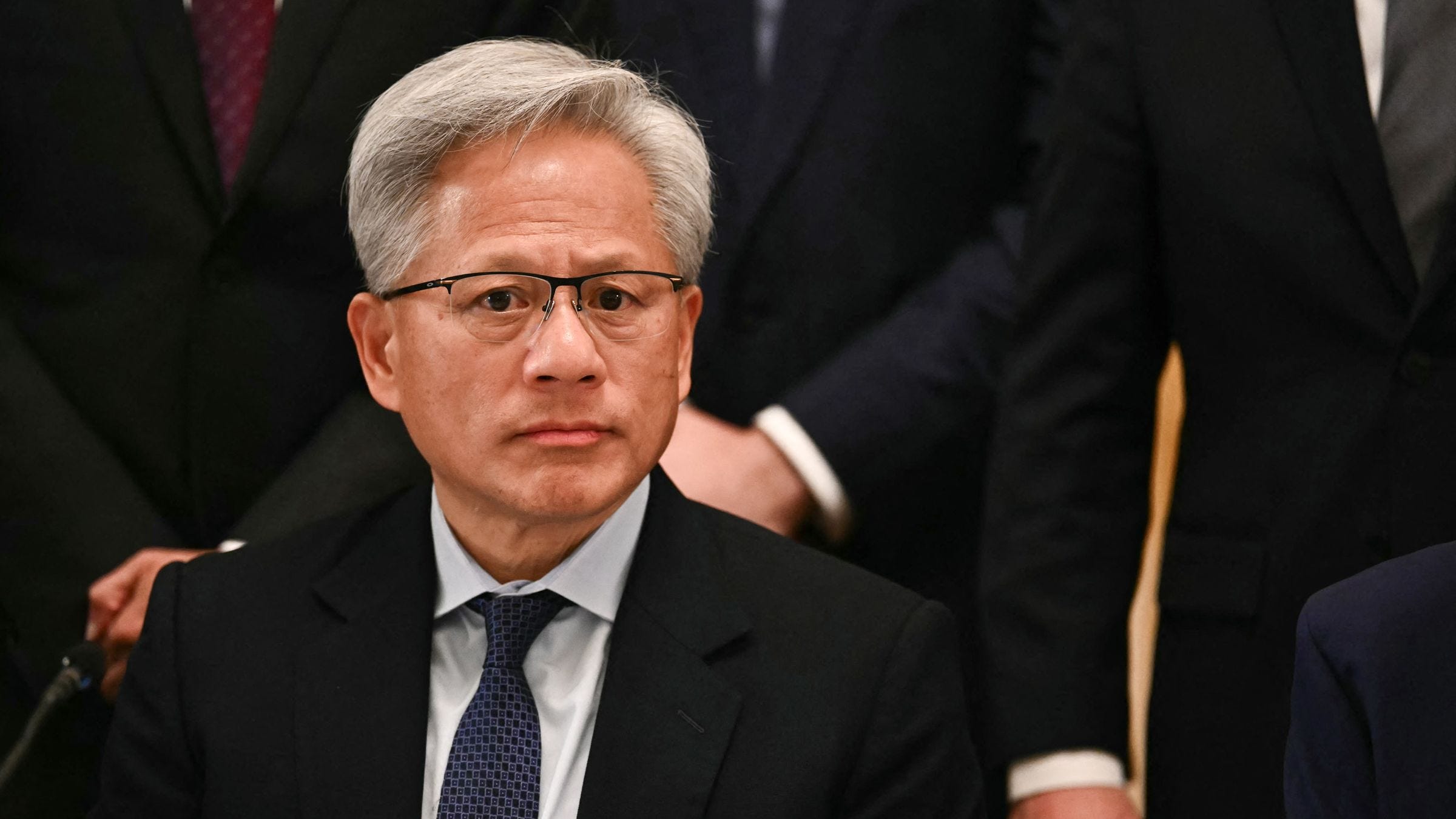
On November 12, Jensen Huang resigned as chief executive of Nvidia after reports of extramarital relationships, one of them with an executive at a Singapore company that bought billions of dollars in Nvidia chips and who is suspected of working for Chinese intelligence. The concern, as TechCrunch summarized it, was whether that relationship compromised sensitive information or helped China get chips it isn’t allowed to have.
On Monday, Nvidia’s board brought him back. And the president of the United States says he arranged it.
“I’ve been speaking to the board directly and indirectly,” he told CNBC, “and I felt very strongly about it.” He said he spoke to Huang “after I made the deal.” He added, “I don’t think anybody could revive the stock like it’s being revived right now.” By Al Jazeera’s account, the shares rose more than 33 percent at the open.
What the government told the board
Nvidia’s own announcement, filed with the SEC, says the board “received input from senior levels of the United States government” and concluded, on that basis, that Huang’s return poses no national security risk.
The president said the same on Truth Social: the government “has no reason to believe” Huang’s return poses any risk. He said Attorney General Todd Blanche had found no evidence of unlawful conduct. TechCrunch notes Blanche has made no formal statement to that effect.
Here is the problem with that assurance. The Justice Department and the SEC are both investigating Nvidia. The board’s own release says its independent investigation into whether Huang was targeted by a foreign intelligence effort “will proceed to conclusion.” It hasn’t concluded. The board reinstated him first and will find out later.
So the government that is investigating the company told the company’s board that its CEO was safe, while the investigation was open, and the president then announced the result as a deal he made. The investigator has become the character reference.
Who else is a party to this
Last Thursday, the House Foreign Affairs Committee released confidential documents showing the Commerce Department approved the sale of almost 580,000 Nvidia AI chips to China, according to the Washington Post. The sales were allowed under a Trump administration arrangement in exchange for a cut of the revenue. The approved customers included two big Chinese tech companies that the Pentagon lists as having ties to China’s military.
Read those two stories together. The federal government is a revenue partner in Nvidia’s sales to China. The executive suspected of a compromising relationship worked for one of Nvidia’s big buyers in the region. And the president, whose government collects that cut, personally pressed for the return of the man at the center of it, and pointed to the stock price as a reason.
As we reported on November 13, the New York Times found that the president was warned twice that Huang might be compromised before the sales went ahead. He said he didn’t hear about it then.
The president’s own case
He made one, and it deserves a hearing. Huang founded the company. He’s widely regarded as the reason it’s worth what it’s worth. A petition for his return drew more than 180,000 signatures. Nobody has been charged with anything, and an affair is not a crime.
And the president offered a China argument of his own: “If we didn’t do this, I could see China coming in and saying to Jensen...” His point, as far as I can tell, is that an unemployed Huang might be recruited by Beijing.
That argument has a hole in it the size of the reinstatement. If the fear is that China could get to Huang, that’s the national security question the investigation exists to answer. You don’t settle it by putting him back in charge of the company before the answer comes in.
Republicans see it too
This isn’t a partisan reading. Senator John Cornyn of Texas responded, “You gotta be kidding me!” and asked, “No national security risk? Based on what?” Representative Don Bacon said Huang was “compromised and exploited by a Chinese spy,” and wants Congress to find out who approved the chip sales. Senator Elizabeth Warren called the rehiring “reckless.” Senator Ruben Gallego said the president “is selling out our national security.”
What it is
Here’s my judgment, and I’ll own it. When the head of government intervenes in a private company’s personnel decision, vouches for an executive on national security while his own prosecutors investigate the company, cites the stock price, and collects a share of the very sales that raised the security question, that is corruption. No bribe is required for that word to fit. A public office used to protect a private interest the office profits from is enough, and every piece of that is on the record in the president’s own words.
And China is the party with the least to lose. It keeps the chips that were approved. It keeps the buyers the Pentagon flagged. It now knows that when an American company’s leader is caught in a relationship with a suspected spy, the American president will call the board and get him his job back.
Cornyn asked the right question. “Based on what?” Congress should make the administration answer it, in writing, before January 3.
I'm sure that investigation has been stopped.
americans elected a convicted felon; fafo