


At some point on Saturday, August 16, Donald Trump posted on Truth Social that he had ordered the Pentagon to substantially reduce Ulchi Freedom Shield, the largest annual combined military exercise between the United States and the Republic of Korea. He called the drills costly. He called them an inappropriate and hostile signal to North Korea. He mentioned his very good relationship with Kim Jong Un. He noted that the exercises were being scaled back rather than cancelled outright only because it was too late to cancel.
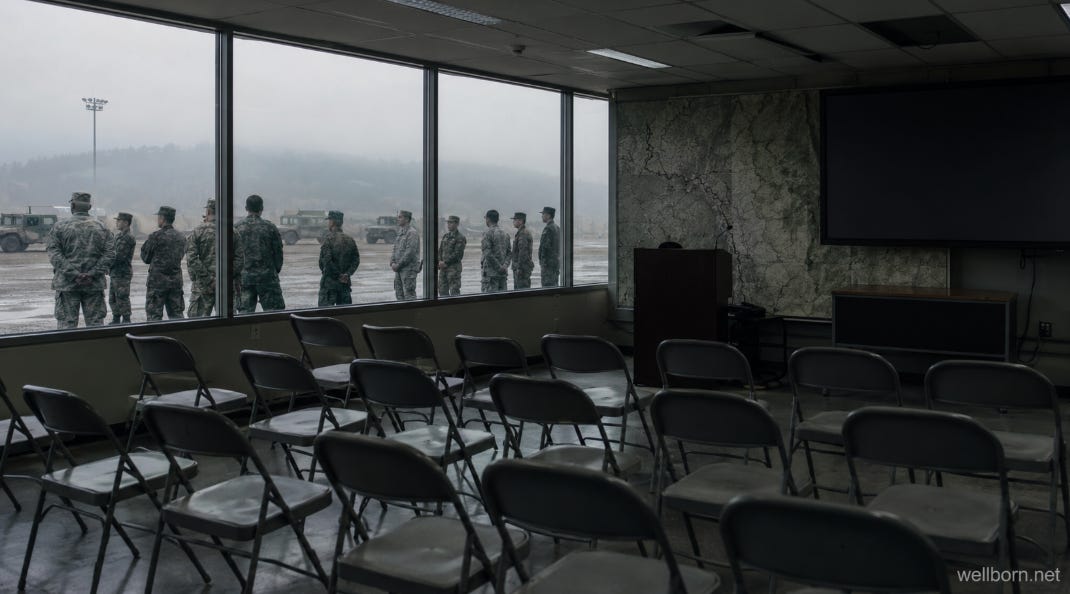
The exercise had been in planning for months. It was scheduled to run August 17 through 27, involving roughly 18,000 troops on the peninsula and command elements across two nations. It began on schedule that Monday, because there was no time to do otherwise.
By Wednesday, South Korea’s Joint Chiefs of Staff confirmed the reductions. Eleven days to five. Fourteen live training events to seven. The exercise would end Friday, August 21, six days early. Combined field maneuvers were scaled back, and, according to the Korea JoongAng Daily, counterattack operations were scrapped entirely.
The South Korean foreign ministry was not consulted in advance. Neither, apparently, was the American ambassador to Seoul.
Why this exercise, this year
Ulchi Freedom Shield is not one of many training events. It is one of two major theater-level combined exercises the alliance runs each year, and 2026 was not a routine iteration.
The 2026 exercise was going to be used to assess capabilities and systems supporting the transition of wartime operational control from the United States to South Korea, a policy shift Washington has been urging for years. A successful assessment could have permitted certification of the future Combined Forces Command’s full operational capability and opened discussion of a transition timeline. That was the purpose. Cutting the exercise in half means the assessment did not happen.
The detail reads procedural until its meaning arrives. The current American National Defense Strategy explicitly calls for South Korea to take primary responsibility for deterring North Korea, with critical but more limited American support. That shift is impossible without validated South Korean command capacity, and validation is what Ulchi Freedom Shield was going to provide. The exercise was the mechanism by which the policy the administration says it wants would become operational.
The administration cancelled half of it in a social media post.
What was actually cut
Live-training events reduced with certain events cancelled or converted to simulations. Counterattack rehearsals, the segments that train forces to respond to a North Korean invasion after initial defense, dropped. Combined field maneuvers scaled back. The Pentagon publicly maintained there would be no degradation to U.S. training objectives. That is a claim the Pentagon has to make when the president has ordered the cut, and it is not, on the face of it, credible.
An exercise built to train two militaries to fight together does not preserve its readiness objectives when its duration is halved and its counterattack scenarios are removed. That is not what those words mean.
The stated reason
Trump linked the decision to two things: his relationship with Kim Jong Un, and South Korea’s refusal to join American action against Iran.
The first is the version he prefers, because he wants a summit and cutting the exercise buys goodwill toward one. Whether that goodwill produces anything, and whether the goodwill is worth what was traded for it, are separate questions the record does not yet answer.
The second is more revealing. American training with a treaty ally on the Korean peninsula, planned for months, involving the certification of a future command structure, was reduced as punishment for that ally’s decision on an unrelated war six thousand miles away. That is what linkage means in practice, and it is a policy of using alliance readiness itself as a bargaining chip.
What the allies watching learned
North Korea. Beijing, which has objected to the exercise calendar for decades. Russia, now closely allied with Pyongyang. Every capital in the region.
They learned that a scheduled combined exercise can be halved on a Saturday, in public, by a leader responding to a mood, without prior consultation with the co-host government, and that the Pentagon will absorb it and produce a statement saying nothing was lost.
It is a lesson about the reliability of American commitments rather than a lesson about Korea, and it is one every intelligence service in the region will have filed for later reference. There will be no announcement about the filing. It will simply be visible in decisions those governments make in the next year, and next five.
What South Korea learned
Seoul is currently governed by an administration that took office in June 2025 and that has been trying to maintain the alliance framework while managing an American partner that has spent the year describing the alliance as expensive. The cut arrived four days before Trump was scheduled to receive President Lee Jae-myung at the White House.
The Diplomat noted that this exposes a contradiction in current U.S. policy. The 2026 National Defense Strategy calls for South Korea to take primary responsibility for deterring North Korea. The exercise cut makes that transfer harder, not easier, because it removes the validation mechanism. So the administration is simultaneously asking Seoul to do more and denying it the tools to prove it can.
The result is not a policy. It is two impulses colliding in public, and the country left holding the pieces is the one whose capital sits within artillery range of the border.
The through line
The Ulchi Freedom Shield cut belongs in the same category as several other actions this administration has taken, and the category is not defense policy or diplomacy.
The category is deciding personally, in public, on short notice, on grounds that shift within the same statement, and then requiring the machinery to catch up. The judge advocates general were removed that way. Seventeen inspectors general were fired that way. The counter-drone authority was allowed to expire because nobody attended to it. The Bureau of Labor Statistics commissioner was fired that way, hours after a report the president did not like.
Each of those actions was individually defensible on the administration’s own terms and cumulatively describes a country that has replaced the ordinary process of government with the mood of one man, filtered through a social media platform, at whatever hour he chooses to post.
The consequences of this one will take a while to become visible. They will show up in a South Korean decision about how much to invest in the alliance, in a Chinese decision about what the alliance is worth as a deterrent, and in a North Korean decision about how much the missile program still requires restraint.
None of those decisions will cite the Saturday post. All of them will factor it in.