


Among the millions of pages the Justice Department released under the Epstein Files Transparency Act, there is an email sent in December 2019 from federal authorities to the executors of Jeffrey Epstein’s estate.
It says that federal agents had not searched the New Mexico property.
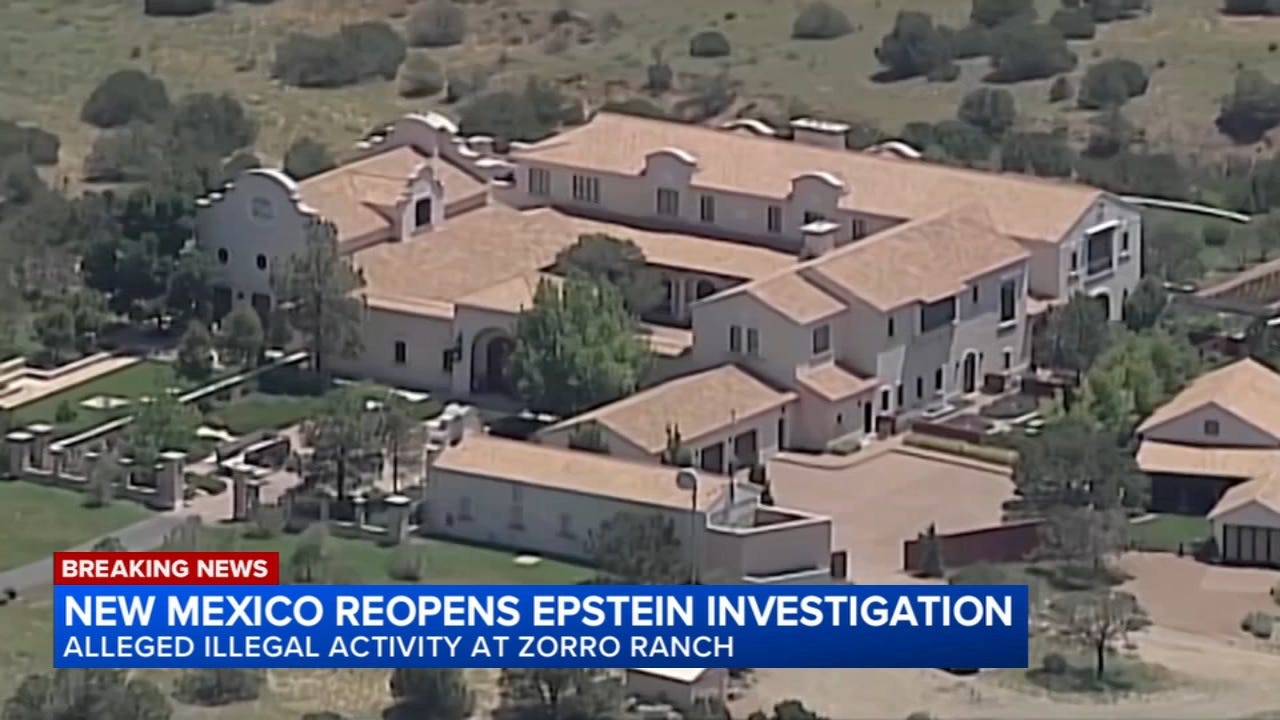
Epstein bought Zorro Ranch in 1993 and held it until his death in 2019. Twenty-six years. Roughly 7,600 acres of high desert about thirty miles south of Santa Fe, with a mansion, an airstrip, and a residence that FBI records describe as having been built for the women he brought there. For seven of those years he used it as his primary residence.
Women had been naming that property in civil filings since the early 2010s. Virginia Giuffre was photographed there. Annie Farmer described what happened to her there. A plaintiff identified in court papers only as Jane described it as well. FBI files include an account from a former ranch manager who said Epstein flew in guests and, in the manager’s word, masseuses.
Federal investigators searched the Manhattan townhouse. They searched Little Saint James. They searched the Palm Beach estate.
They did not go to New Mexico.
What the state did instead
New Mexico opened its own criminal investigation in 2019, after Epstein died.
It closed within a year without a single charge, and the reason it closed is in the record. Federal prosecutors in the Southern District of New York asked the state to stand down.
So there is a period, running from 2019 to this year, in which the only two law enforcement bodies with jurisdiction over that ranch had arrived at the same arrangement. The federal government was not going to search it. The state government was going to stop trying, at the federal government’s request.
There is one more detail from those years that is worth stating plainly. Epstein was convicted of a sex offense in Florida in 2008. He was never required to register as a sex offender in New Mexico, in a state where he spent a substantial part of the following decade, and no New Mexico prosecutor opened a case against him during any of it.
March 9, 2026
Investigators from the New Mexico Department of Justice, the State Police, and the Sandoval County Sheriff’s Office arrived at 49 Zorro Ranch Road in Stanley, New Mexico, on a Monday morning in March. They brought K-9 units.
It was the first law enforcement search of the property in its history.
Attorney General Raúl Torrez had reopened the case on February 19, after reviewing what the federal government had finally released. His office said the revelations in the previously sealed FBI files warranted further examination. Three days before he reopened it, the New Mexico House had voted unanimously to create a truth commission with subpoena power, chaired by state Representative Andrea Romero, to establish what happened on New Mexico soil and which officials knew about it.
Romero’s explanation of why a state legislature had to do this is the sentence that should have led every story about it. Federal investigations, she said, had failed to put together an official record.
The commission has since issued subpoenas to twenty institutions and agencies. About half have complied fully. It has collected more than a hundred thousand records.
The ranch itself was sold by Epstein’s estate in 2023, with the proceeds going to creditors, to the family of Don Huffines, a Texas Republican who won a primary for state comptroller this year. The current owners have cooperated with the search.
What the Justice Department is doing about it
On August 5, the Attorney General of New Mexico sued the Department of Justice.
Torrez alleges that the federal government is hiding information about Epstein and his co-conspirators and stonewalling his state’s investigation. A sitting state attorney general, conducting an active criminal inquiry into child sexual abuse, has gone to federal court because the Justice Department will not give him what it has.
He is the second person to sue this Justice Department over these files this year.
Phang v. Blanche
The Epstein Files Transparency Act became law in November 2025. It ordered the Justice Department to release everything the FBI had gathered, with redactions permitted only to protect victims, no later than December 19.
The Department missed the deadline. It released the bulk of the material in January, and what it produced inverted the statute. Names and photographs and identifying details of victims appeared in the files. Names of Epstein’s associates were blacked out.
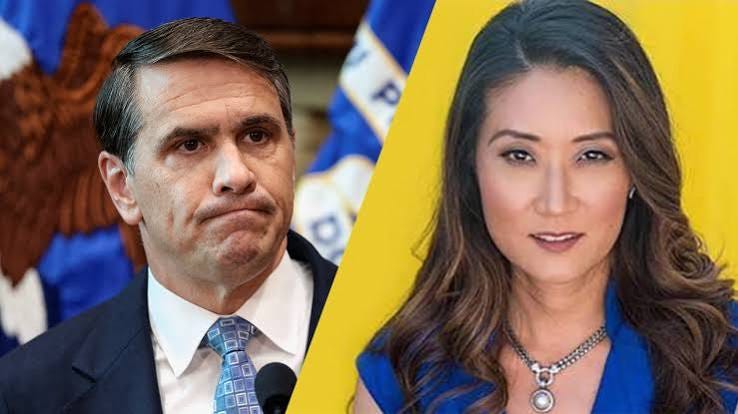
Katie Phang, an attorney and independent journalist, sued in April for a narrow set of items. Eight emails, including some concerning a video and sexual activity with girls. A draft indictment listing alleged co-conspirators. FBI handwritten notes from interviews with a woman who says Epstein introduced her to Donald Trump and that Trump sexually assaulted her when she was thirteen, an allegation Trump denies and which remains uncorroborated. Hundreds of thousands of foreign-language documents the Department has never produced at all. And the written justification for the redactions, which the statute requires and which the Department has never provided.
On June 25, Judge Emmet Sullivan issued a forty-eight page opinion granting a preliminary injunction. He found that Phang was likely to prevail, and wrote that Todd Blanche had conceded her arguments on the merits by declining to respond to them substantively. Sullivan gave the Department until July 2 to produce the documents or explain in writing why it would not.
On July 2 the Department produced nothing.
Its explanations were these. The emails contained protected information. The draft indictment naming co-conspirators could not be located in unredacted form. The handwritten FBI notes were substantially similar to typed reports already released. Reviewing the foreign-language documents was not practicable.
On July 25 Sullivan ordered ten of the disputed records delivered to his chambers, unredacted, for his own review. Blanche complied on July 30, thirty-two minutes before the deadline.
At a status conference on August 13, Sullivan pressed Department lawyers on whether they had complied with his other orders, including the requirement to publish justifications for the redactions. He told the room that he had absolutely no desire to hold government attorneys in contempt, and then delivered what a reporter present described as a history lesson on the occasions when he has done it.
Todd Blanche was confirmed as Attorney General while all of this was pending, over the objections of Epstein survivors who testified about the incomplete release. Before that, as acting Attorney General, he personally interviewed Ghislaine Maxwell, who was shortly afterward transferred to a less restrictive federal prison.
The shape of it
Set the two halves next to each other and the same behavior appears at every stage, under two administrations, across seven years.
In 2019 the federal government declined to search a property where multiple women said they had been abused, and asked a state to stop investigating it.
In 2026 the federal government produced roughly half of what the law required, exposed the victims it was ordered to protect, concealed the associates it had no authority to conceal, and then declined to explain the concealment when a federal judge ordered it to.
When a state attorney general opened his own criminal case, the same Department withheld what he needed and he had to sue.
None of that requires a conspiracy, which is what makes it durable. It requires only a consistent institutional preference for not knowing, held by enough people in enough offices, sustained long enough that the record never gets assembled and the question stops being askable.
Andrea Romero named it exactly. Federal investigations failed to put together an official record. A truth commission in a state legislature is now doing the work the Department of Justice declined to do, using subpoenas, with a hundred thousand records and counting.
One more thing
Virginia Giuffre was photographed at Zorro Ranch. She spent two decades telling people what had happened to her there and elsewhere, at enormous personal cost, and she was among the reasons any of this is public at all.
She died in 2025.
The first search of that property took place ten months later, in March of this year, conducted by state investigators with dogs, because a state legislature and a state attorney general decided to do what the federal government had spent twenty-six years declining to do.
She did not live to see anyone walk the ground.
Of course it was never searched or investigated. Dt and his cronies made sure of that. 😒
What...or who...are you afraid we'll find when we dig up Zorro Ranch, The Donald??? What are you hiding????