The setup
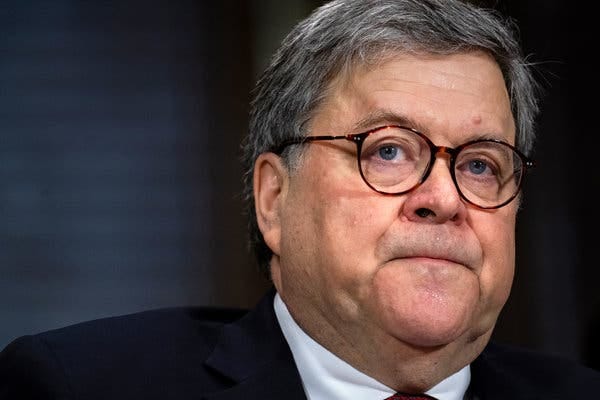
William Barr was born in 1950 in New York City, the son of a Columbia dean, and built a career that ran twice through the top of the Justice Department. He first served as Attorney General under George H.W. Bush from 1991 to 1993, then spent decades in the private sector as a corporate lawyer and general counsel, before returning to run the department a second time under Trump beginning in February 2019. He arrived with a reputation as an institutionalist, a believer in the strength and independence of executive authority, and a lawyer’s lawyer who valued the department’s credibility as its most important asset. For most of his tenure he was one of Trump’s most reliable defenders, writing a memo before his appointment that argued expansively for presidential power and later overseeing a controversial characterization of the Mueller report that critics said understated its findings. He was not, by disposition or record, an obstacle to this president. Which is what makes what happened in the final weeks of 2020 remarkable.
The defining moment
On December 1, 2020, less than a month after the election, Barr gave an interview to the Associated Press and said, as the sitting Attorney General of the United States, that the Department of Justice had not found evidence of fraud that would change the outcome of the election. “To date, we have not seen fraud on a scale that could have effected a different outcome in the election,” he said. This was not a hedge or a diplomatic dodge. It was the head of the federal law enforcement apparatus, using the investigative authority of that apparatus, stating publicly that the central claim Trump was making to the country, that the election had been stolen through fraud, was not supported by what his own department had found.
Trump was reportedly furious. Barr resigned three weeks later, on December 14, 2020, the day the Electoral College formally cast its votes for Joe Biden. In his resignation letter he praised Trump’s record in office and did not mention the fraud dispute directly, but the timing and the substance of his AP statement had already done the damage to the narrative Trump needed intact.
The receipts
The paper trail here is unusually authoritative, because it comes from sworn testimony rather than a press statement alone.
In his AP interview, December 1, 2020: “we have not seen fraud on a scale that could have effected a different outcome.”
In his memoir One Damn Thing After Another, published in 2022, Barr wrote that he told Trump directly, in a private Oval Office meeting, that the claims of a stolen election being pushed by Trump’s legal team were “bullshit.” He used that specific word, by his own account, to the president’s face.
In his June 2022 testimony to the House January 6th Select Committee, played on video during the nationally televised hearings, Barr testified under oath that he told Trump the fraud claims were “bogus and silly” and that continuing to push them was doing “a great, grave disservice to the country.” He testified that he told Trump the DOJ had specifically investigated the major claims being circulated, including allegations in Georgia, Michigan, and Pennsylvania, and found them to be without merit. He said he told Trump this “in a pretty direct way.”
He also testified that Trump’s reaction to being told this was to become “detached from reality” if he actually believed what he was saying, a characterization Barr offered under oath about the sitting president he had served.
Despite all of this, in May 2024, with Trump facing trial and already the presumptive Republican nominee, Barr endorsed him for president, saying he would vote for Trump because he viewed a second Biden term as the greater threat to the country. He did this after testifying on the congressional record that Trump had pushed claims Barr personally knew to be false, after using the word “bullshit” to describe those claims to Trump’s face, and after resigning specifically because he would not continue to be associated with the effort to overturn a legitimate election.
The downstream cost
The claims Barr refuted did not stop circulating because he refuted them. They became the organizing narrative for January 6th, cited directly by rally speakers and by Trump himself in the speech that preceded the attack on the Capitol. Barr’s own investigative findings, delivered with the full authority of the Justice Department, were simply discarded by the political movement he then chose to rejoin.
Barr’s endorsement provided something the movement needed badly in 2024: an institutionalist Republican with genuine law enforcement credibility, willing to stand behind the man whose central lie he had personally investigated and refuted. His name lent seriousness to a candidacy built substantially on the claim he had already proven false. He knew exactly what he was lending his name to. He had said so, under oath, on television, years before he decided it did not matter.
The verdict
Barr occupies a unique position in this Registry because he did not merely fail to oppose Trump or describe him accurately in a moment of political convenience. He used the actual machinery of federal law enforcement, the FBI’s investigative authority, the Justice Department’s prosecutorial resources, to test the specific factual claim at the center of Trump’s most dangerous lie, and he found it false, and he said so publicly while still in office, at real personal and professional cost. He resigned rather than continue enabling it. He then watched that lie metastasize into an attack on the Capitol, testified under oath about exactly how false it was and exactly how directly he had told Trump so, and four years later endorsed him anyway.
He had the evidence. He had the authority. He had the personal conversation, “bullshit,” his own word, delivered to the president’s face. None of it mattered when the choice came around again. The Attorney General who proved the lie false decided the lie did not disqualify the liar.