


(Updated 5/3/2026)
For eighty years, the UFO story survived in the margins. Mocked in public. Managed in private. Buried under stigma, bad reporting, official evasions, and enough nonsense to make any serious person recoil.
That arrangement is breaking down.
Not all at once. Not cleanly. Not with the kind of cinematic clarity people imagine when they hear the word disclosure. There has been no immaculate presidential speech, no perfect archive dump, no final, satisfying moment of truth. But that may have always been the wrong expectation. Disclosure was never likely to arrive as a single event. It was always more likely to arrive as a slow institutional crack-up: hearings, leaks, whistleblowers, document fights, semantic shifts, and reluctant admissions scattered across years.
That is where we seem to be now.
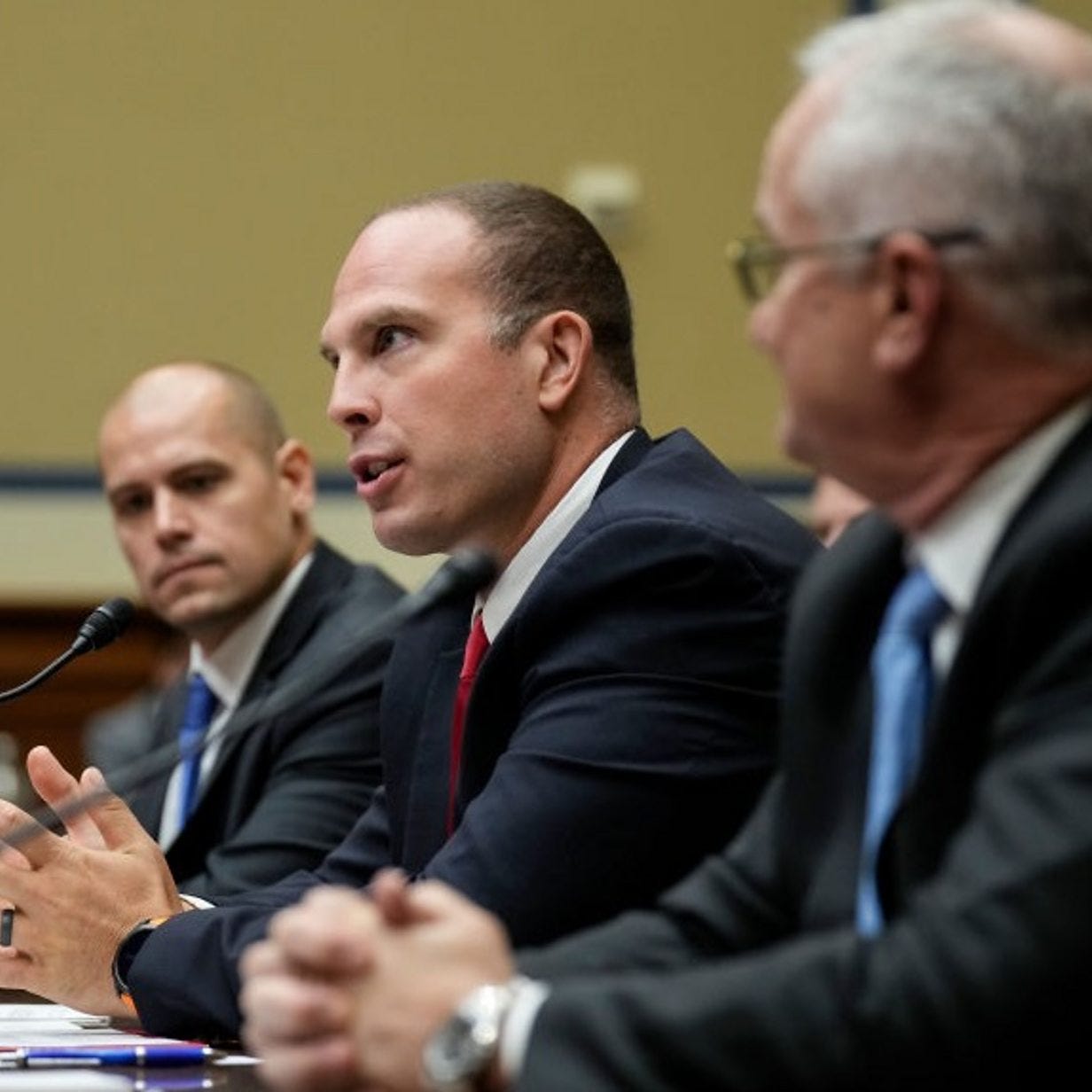
The old posture, which was to smirk at the subject in public while quietly managing it behind closed doors, is no longer holding together. Congress has taken it seriously enough to hold hearings. Military aviators have testified under oath. Intelligence officials have alleged hidden legacy programs. Scientists with mainstream reputations have started arguing that, at a minimum, the taboo itself is no longer defensible. The atmosphere has changed, and once that happens, the story changes with it.
Which means credibility suddenly matters a lot more than it used to.
Because once a subject moves from cultural exile to an institutional pressure point, the real question is not just what do you believe? The real question becomes who is actually worth listening to while the truth is still coming into focus?
That is what this list is for.
This is not a ranking of who has publicly proved extraterrestrials. No one has done that. It is a ranking of the people most worth taking seriously if you want to understand where the UFO story actually stands right now. I ranked them by access, expertise, seriousness, public risk, and staying power. Some are direct military witnesses. Some are intelligence insiders. Some are scientists. Some are journalists. A few are complicated but essential figures whose importance to the history of disclosure is simply too large to write out of the story.
If the next phase is coming, and I think it is, these are the names to know.
This is not a truth ranking. It is a credibility ranking.
That distinction matters now more than ever.
Tier One: The people at the center of the modern shift
1. David Fravor Claim: He says he directly encountered the 2004 Tic Tac during the Nimitz incident. Why credible: Fravor remains the benchmark: a direct witness, highly trained, calm, and central to the strongest modern military UFO case on record.
2. Ryan Graves Claim: He says Navy aviators were seeing unknown objects repeatedly off the East Coast and that the issue is also an aviation safety problem. Why credible: Graves helped move the subject from cultural curiosity to operational concern. He is disciplined, public, and difficult to wave away.
3. David Grusch Claim: He alleges hidden crash-retrieval and reverse-engineering programs exist inside the U.S. government. Why credible: Grusch brought the subject into a new phase by making extraordinary allegations from inside the intelligence world. His biggest claims are largely secondhand, but his standing and willingness to testify changed the terrain.
4. Alex Dietrich Claim: She corroborates the Nimitz Tic Tac encounter from her own cockpit. Why credible: Dietrich matters because she strengthens one of the strongest cases on record with her own firsthand testimony and professional credibility.
5. Kevin Day Claim: He says radar aboard the Princeton tracked unusual objects during the Nimitz events. Why credible: Day is a key technical witness tied to a landmark event involving multiple observers and multiple systems.
6. Christopher Mellon Claim: He argues some military UFO cases represent a genuine national security issue and have been buried by secrecy and institutional inertia. Why credible: Mellon is one of the most important insiders in the modern disclosure era. He understands the machinery and helped force it into daylight.
7. Garry Nolan Claim: He argues the phenomenon deserves rigorous scientific examination and that some associated evidence is worth laboratory analysis. Why credible: Nolan has major mainstream scientific credentials and has helped make the topic more respectable in research circles.
8. Avi Loeb Claim: He argues anomalous objects should be studied openly with instruments and data rather than suppressed by stigma. Why credible: Loeb brings scientific prestige and methodological seriousness to a subject long denied both.
9. J. Allen Hynek Claim: After years as the Air Force’s scientific adviser, he concluded that a residue of cases remained unexplained. Why credible: Hynek began inside the system as a skeptic and ended up one of the most important serious voices in the subject’s history.
10. David Spergel Claim: He has argued that UAP should be treated as a data problem, not a belief contest. Why credible: As chair of NASA’s UAP study team, he represents institutional science slowly conceding that this issue cannot be dismissed forever.
The top of the list tells the story.
Pilots. Radar operators. Intelligence officials. Scientists.
Not fringe celebrities. Not late-night radio myths. Not tabloid psychics.
Tier Two: The people who made the modern case impossible to ignore
11. Tim Gallaudet Claim: He says UAP and possible transmedium incidents were taken seriously inside government channels. Why credible: Retired rear admiral, former NOAA acting administrator, and part of the growing class of serious officials speaking more openly.
12. Chad Underwood Claim: He recorded the FLIR video associated with the Tic Tac incident. Why credible: He is directly tied to one of the most scrutinized pieces of military UAP evidence in the modern era.
13. Gary Voorhis Claim: He says shipboard radar and related systems during the Nimitz event showed something genuinely anomalous. Why credible: Another direct military witness whose account reinforces a case that already stands above most others.
14. John Greenewald Jr. Claim: He has spent decades forcing government documents into public view through FOIA. Why credible: Greenewald matters because records matter. He brings documentation, not just lore.
15. Mick West Claim: He argues many famous UFO cases have ordinary explanations. Why credible: A serious ranking needs serious skeptics. West’s importance is that he forces claims to survive pressure.
16. Luis Elizondo Claim: He says some UAP display capabilities beyond known technology and that the issue was buried inside the bureaucracy. Why credible: Elizondo helped push the subject into the mainstream. Some of his public claims remain debated, but his role in the modern shift is too important to deny.
17. Jacques Vallée Claim: He argues the phenomenon is real but may not fit a simplistic extraterrestrial-spacecraft model. Why credible: Vallée remains one of the deepest thinkers in the field and one of the few who consistently widened the frame without losing seriousness.
18. Richard Haines Claim: He focused on pilot sightings and aviation-based analysis of unexplained events. Why credible: A careful, operationally grounded researcher with an aerospace research background.
19. Kevin Knuth Claim: He argues that a small subset of cases deserves serious physics analysis. Why credible: Knuth represents the technical wing of the subject, trying to move it from speculation into measurable inquiry.
20. Sean Kirkpatrick Claim: He argued UAP should be investigated while also saying evidence for extraterrestrial craft had not been established. Why credible: Whether one agrees with him or not, he had official authority and direct visibility into the government’s most recent formal response.
Tier Three: The scientists, officials, and journalists who kept the subject alive
21. James E. McDonald Claim: He argued that some classic UFO cases resisted conventional explanation and deserved scientific attention. Why credible: McDonald staked real scientific reputation on the subject long before that became safer to do.
22. Peter Sturrock Claim: He maintained that UFO reports warranted sober scientific review. Why credible: Sturrock helped show that serious people could approach the issue without turning it into spectacle.
23. Leslie Kean Claim: She helped bring the Pentagon UFO story into mainstream journalism. Why credible: Few reporters have done more to transform the public conversation from ridicule to legitimate inquiry.
24. Ralph Blumenthal Claim: He co-bylined the 2017 reporting that reset the modern discussion. Why credible: Blumenthal helped turn a long-running undercurrent into a mainstream national story.
25. Helene Cooper Claim: She helped anchor the 2017 New York Times report on the Pentagon’s UFO effort. Why credible: She brought mainstream national security standards to a subject that had long lacked them.
26. George Knapp Claim: He argues that secrecy around Nevada test sites, long-buried witnesses, and hidden programs deserve serious attention. Why credible: Knapp is one of the great bridge figures in the story. He kept sources talking when much of the press would not go near the subject.
27. Ross Coulthart Claim: He says multiple insiders describe hidden legacy programs and buried evidence. Why credible: Coulthart is a serious investigative reporter with strong sourcing and a willingness to push difficult stories into public view.
28. Robert Powell Claim: He argues certain military cases merit engineering-style analysis rather than reflex dismissal. Why credible: Powell stands out for trying to evaluate cases through technical structure rather than mythology.
29. Karl Nell Claim: He says serious insider testimony supports the non-human-intelligence hypothesis. Why credible: His defense background gives his statements weight, even if the full public evidentiary picture remains incomplete.
30. Jay Stratton Claim: He helped oversee serious government attention to military UAP cases. Why credible: Stratton was deeply involved during a critical phase when the subject began crossing into institutional legitimacy.
One reason disclosure feels closer is simple:
the witness pool changed.
The people speaking now increasingly have rank, credentials, and institutional memory.
Tier Four: The insiders and researchers near the center of the post-2017 push
31. James Lacatski Claim: He says classified government work looked at anomalous cases more deeply than the public understands. Why credible: Lacatski points toward layers of investigation that appear to run deeper than official summaries suggest.
32. Colm Kelleher Claim: He argues some cases and related phenomena warranted deeper official study. Why credible: Kelleher has long been close to some of the most consequential research and funding networks in the field.
33. Eric Davis Claim: He has argued that some cases may imply exotic technology. Why credible: Davis brings real scientific training and longstanding ties to defense-adjacent research environments.
34. Hal Puthoff Claim: He argues some UAP cases point to breakthrough physics or nonconventional propulsion. Why credible: Puthoff remains controversial, but also undeniably influential in the modern disclosure ecosystem.
35. Robert Bigelow Claim: He funded serious private UFO research and helped bring the issue into more elite institutional circles. Why credible: Bigelow did not just speculate. He put money, infrastructure, and attention behind the subject.
36. Robert Salas Claim: He says a UFO-related event coincided with missile shutdowns at Malmstrom. Why credible: His account has been consistent for years and remains central to the nuclear-UFO story.
37. Charles Halt Claim: He says the Rendlesham Forest case involved something extraordinary near RAF Bentwaters. Why credible: A senior military witness tied to one of the most famous enduring cases in modern UFO history.
38. Lonnie Zamora Claim: He reported a close-range landing case in Socorro in 1964. Why credible: Zamora remains one of the strongest classic witnesses because his case never collapsed under scrutiny.
39. Kenneth Arnold Claim: He reported the 1947 sighting that launched the modern UFO era. Why credible: Arnold is foundational. Without him, the public history of the subject looks very different.
40. Edward J. Ruppelt Claim: He said some early military cases were not easily dismissed. Why credible: As a leader of the Air Force’s official investigation, Ruppelt remains one of the most important early institutional voices.
Tier Five: The historic officials and influential figures who shaped the public record
41. Nathan Twining Claim: His 1947 memo treated the phenomenon as something warranting serious attention. Why credible: Twining’s importance comes from rank, timing, and his position at the highest levels of military judgment.
42. Claude Poher Claim: He helped lead serious French government-backed analysis of UFO reports. Why credible: Poher represents a more structured and less stigmatized national approach to the subject.
43. Jean-Jacques Velasco Claim: He argued some French cases remained genuinely unexplained. Why credible: A significant official figure in the history of European state-backed UFO inquiry.
44. Yves Sillard Claim: He supported continued French official research into anomalous aerospace reports. Why credible: Sillard helped give institutional durability to the French effort.
45. Nick Pope Claim: He says some U.K. Ministry of Defence files contained genuinely puzzling cases. Why credible: Pope had real access to official case handling in Britain and remains one of the best-known international voices.
46. Diana Walsh Pasulka Claim: She argues that modern UFO culture, secrecy, technology mythology, and elite networks are tightly intertwined. Why credible: Pasulka is valuable because she explains the ecosystem around disclosure, not just the sightings themselves.
47. Jeremy Corbell Claim: He publicizes videos, witness interviews, and insider accounts suggesting a much larger hidden story. Why credible: Corbell has helped bring access, attention, and momentum to cases that might otherwise have stayed buried. He is best understood as a catalyst figure.
48. Stanton Friedman Claim: He argued Roswell and other military cases pointed to a real cover-up. Why credible: Friedman was one of the most important public advocates in the long middle era of the subject and helped keep attention on military secrecy.
49. Robert Hastings Claim: He collected testimony about UFO incidents near nuclear weapons sites. Why credible: Hastings built one of the most significant witness archives on the nuclear-UFO connection.
50. Bob Lazar Claim: He says he worked near Area 51 reverse-engineering alien craft. Why credible: Lazar remains one of the most debated figures in the entire subject, but also one of the most influential. Whatever one thinks of his claims, he helped define the public imagination of hidden aerospace secrecy.
The first fifty already make the case.
The next fifty make it harder to look away.
Tier Six: The astronauts, admirals, and governors whose word carries institutional weight
51. Edgar Mitchell Claim: The Apollo 14 astronaut said for years that extraterrestrial visitation was real and that elements of the U.S. government had long known. Why credible: He walked on the Moon. That alone forces a different posture toward whatever he chose to say next.
52. Gordon Cooper Claim: The Mercury 7 astronaut said he saw a UFO film at Edwards Air Force Base and witnessed objects himself as a fighter pilot. Why credible: One of the most respected pilots of his generation, on record repeatedly, with nothing to gain.
53. Paul Hellyer Claim: The former Canadian Defence Minister said multiple non-human civilizations have been visiting Earth and that some governments know it. Why credible: A former cabinet minister of a NATO country making that claim publicly is itself part of the historical record, regardless of how anyone weighs it.
54. Lord Hill-Norton Claim: The former UK Admiral of the Fleet and Chief of Defence Staff said the British government had not told the truth about Rendlesham and similar cases. Why credible: It is hard to construct a higher-ranking foreign military voice on this subject in the postwar era.
55. Fife Symington Claim: The former Arizona Governor admitted he saw the Phoenix Lights and said they were not man-made. Why credible: A sitting governor who first joked about it and later confessed he was a witness adds something rare. Personal political risk on the record.
56. Buzz Aldrin Claim: The Apollo 11 astronaut has said the crew saw something unexplained on the way to the Moon, even as he resists more sensational framings. Why credible: His careful, qualified account is exactly the kind of restrained testimony that should weigh more, not less.
57. James Woolsey Claim: The former CIA Director has said his wife and others witnessed a striking close-range encounter, and that the subject deserves real attention. Why credible: A former director of central intelligence taking the issue seriously in public is not a small thing.
58. Stephen Lovekin Claim: The retired Army Signal Corps officer said briefings during the Eisenhower era treated recovered craft as a real issue. Why credible: His testimony fits a long pattern of sworn military statements pointing the same direction.
59. Robert Dean Claim: The retired NATO Sergeant Major said a classified study called “The Assessment” concluded non-human craft were monitoring Earth. Why credible: Whether or not one accepts every detail, his career and the consistency of his statements over decades earn him a place in the record.
60. Donald Keyhoe Claim: The retired Marine Corps Major argued for decades that the U.S. government was withholding what it knew about UFOs. Why credible: Through NICAP, he organized the first serious civilian challenge to official secrecy and forced congressional attention.
Tier Seven: The legislators who dragged this onto the floor
61. Harry Reid Claim: He used his position as Senate Majority Leader to quietly fund the Pentagon’s modern UAP investigation. Why credible: Without Reid, AATIP does not exist, the 2017 stories do not break, and the modern disclosure era does not begin.
62. Marco Rubio Claim: He has said as a senior intelligence committee member that what some witnesses describe is either real or evidence of a serious counterintelligence failure. Why credible: That binary, said on the record by a Gang of Eight member, is the cleanest reframing the subject has ever received.
63. Chuck Schumer Claim: He co-authored the UAP Disclosure Act, the most aggressive legislative push on this issue ever attempted. Why credible: A Senate Majority Leader putting his name on a bill to compel records review changes the political weight of the topic.
64. Kirsten Gillibrand Claim: She co-led efforts to fund and structure the Pentagon’s All-domain Anomaly Resolution Office. Why credible: She has remained one of the most consistent and serious legislative voices on the subject.
65. Mike Rounds Claim: He has openly said the subject deserves serious oversight and helped shepherd UAP language into defense legislation. Why credible: A Republican senator backing this in public is part of why it has not collapsed back into partisan caricature.
66. Mark Warner Claim: As Senate Intelligence Chair, he repeatedly pushed for more clarity on what the executive branch was hiding. Why credible: That role gives him visibility into the actual classified picture, which makes his interest meaningful.
67. Tim Burchett Claim: He has said publicly that he believes there is a coverup and that whistleblowers are being retaliated against. Why credible: A sitting member of Congress saying that out loud, repeatedly, is itself part of why this story will not die.
68. Anna Paulina Luna Claim: She has co-led the bipartisan UAP Task Force in the House and pushed for hearings under oath. Why credible: She has been willing to spend political capital forcing the subject into formal proceedings.
69. Andre Carson Claim: As a House Intelligence subcommittee figure, he chaired hearings that brought military aviator testimony into the public record. Why credible: Carson helped normalize the act of treating UAP as a normal oversight matter, not a punchline.
70. Eric Burlison Claim: He has questioned witnesses in House hearings with focused, technical follow-up rather than spectacle. Why credible: His seriousness in those rooms helped keep the hearings credible rather than circus-like.
Once legislators put their names on it, the subject is no longer fringe by definition.
It is oversight.
Tier Eight: The military and aviation witnesses who refuse to recant
71. David Schindele Claim: The former USAF missileer said a UFO incident at Minot coincided with launch system disruptions at his missile site. Why credible: He is part of a long line of consistent missileer testimony from people with active duty clearances.
72. Bruce Fenstermacher Claim: The former USAF officer said a glowing object hovered over a Wyoming missile facility and that the incident was suppressed. Why credible: Another direct nuclear-site witness whose account converges with a much larger pattern.
73. Frederick Meiwald Claim: The former USAF officer was on duty during the Malmstrom missile shutdown event. Why credible: His firsthand account is one of the strongest pieces of testimony in the nuclear-UFO archive.
74. Robert Jacobs Claim: The former USAF officer said a tracking film captured a UFO interfering with a 1964 missile test, and that the footage was suppressed. Why credible: His allegation involves a specific event, a specific film, and a long professional silence broken only later in life.
75. Milton Torres Claim: The former USAF pilot said he was scrambled in 1957 over the UK to fire on a UFO showing a massive radar return. Why credible: His decades of silence and his specificity once he spoke fit the profile of a witness, not a fabricator.
76. James Penniston Claim: The retired USAF security officer said he physically encountered a craft during the Rendlesham incident. Why credible: His account is detailed, consistent across decades, and reinforced by other military witnesses on the same nights.
77. John Burroughs Claim: The former USAF airman said he was close to the same anomalous object at Rendlesham and later suffered medical effects. Why credible: His VA-related medical record arguably represents one of the more concrete pieces of physical aftermath in the UFO file.
78. Travis Walton Claim: He said he was taken aboard a craft in 1975 during a logging job in Arizona. Why credible: His case is contested, but the witness statements of his crew and the polygraph history make it one of the most stubbornly persistent abduction reports on record.
79. Jesse Marcel Sr Claim: The Roswell intelligence officer said the debris he handled was unlike any conventional material. Why credible: He was the first official to handle the Roswell wreckage, and his later refusal to back away from his account remains central to the case.
80. Walter Haut Claim: The Roswell Army Air Field public information officer left a sworn affidavit stating he saw recovered craft and bodies. Why credible: That affidavit, sealed for after his death, is one of the most direct insider claims in the entire historical file.
Tier Nine: The scientists and academics still pushing the field forward
81. John Mack Claim: The Harvard psychiatrist concluded that some experiencer accounts could not be reduced to ordinary mental illness. Why credible: He risked, and arguably damaged, his Harvard standing in order to take the testimony seriously. That tells you something.
82. Travis Taylor Claim: The physicist and longtime defense contractor has spoken openly about anomalous events at Skinwalker Ranch. Why credible: His credentials and contractor history give weight to claims that would otherwise be easy to dismiss.
83. Beatriz Villarroel Claim: The astrophysicist leads the VASCO project, which examines old sky surveys for objects that appeared and vanished. Why credible: Her work pushes toward instrument-based analysis of anomalies rather than relying solely on witness reports.
84. Massimo Teodorani Claim: The Italian astrophysicist has published peer-reviewed analyses of recurring light phenomena like Hessdalen. Why credible: He has spent years applying real measurement to a place where actual data exists, instead of speculating.
85. Erling Strand Claim: The Norwegian engineer co-founded Project Hessdalen, the longest-running scientific monitoring of recurring anomalous lights anywhere. Why credible: He represents the rare model of patient, instrumented observation rather than narrative.
86. Auguste Meessen Claim: The Belgian physicist analyzed radar and visual data from the 1989-1990 Belgian wave and treated it as a real anomaly. Why credible: His work tied a major European wave event to formal analysis rather than anecdote.
87. Iya Whiteley Claim: The UCL space scientist served on the UK side of academic UAP discussion and argued for serious data-driven study. Why credible: She is an example of a UK academic willing to speak about the subject without sensationalism.
88. Mark Rodeghier Claim: As scientific director of the Center for UFO Studies, he has spent decades cataloguing and analyzing case data. Why credible: He represents the slow institutional discipline that the subject has badly needed.
89. Iain Boyd Claim: The aerospace engineer served on NASA’s UAP panel and has supported open scientific examination of the data. Why credible: A working aerospace academic putting his name to that effort matters precisely because it normalizes the inquiry.
90. Don Donderi Claim: The retired McGill psychologist argued the witness data, taken seriously, could not be dismissed as mass delusion. Why credible: He brought formal academic credibility to the witness-data side of the argument.
Tier Ten: The journalists, historians, and authors who built the public record
91. Garrett Graff Claim: The journalist’s history of the U.S. government and UFOs argued the subject deserves serious historical treatment. Why credible: A mainstream nonfiction journalist of his caliber engaging the topic without ridicule moves the conversation.
92. Tim McMillan Claim: The former police lieutenant turned reporter has broken multiple stories at The Debrief about UAP programs and witnesses. Why credible: His sourcing and pacing suggest a real reporter, not a hobbyist.
93. Bryce Zabel Claim: The longtime journalist and screenwriter has argued the subject is one of the great underreported stories of the era. Why credible: He brings narrative discipline and a working journalist’s instinct to a field that often loses both.
94. Marik von Rennenkampff Claim: The former State Department official argued in mainstream outlets that the U.S. government’s posture on UAP no longer holds together. Why credible: His former government role gives his commentary structural weight beyond opinion.
95. Christopher Sharp Claim: His Liberation Times reporting has surfaced fresh allegations and named insiders other outlets ignored. Why credible: He is one of the few journalists treating this as a beat with continuous reporting rather than a one-off feature.
96. Richard Dolan Claim: His historical work argued the U.S. national security state has run parallel UFO programs since the 1940s. Why credible: His archival approach has shaped how serious researchers think about the institutional history of the subject.
97. Kevin Randle Claim: The retired Army officer and longtime researcher has produced some of the most documented work on Roswell. Why credible: He combines a military background with an investigator’s discipline and a willingness to revise his own conclusions.
98. Timothy Good Claim: The British author has cultivated insider sources across multiple militaries for decades. Why credible: His sourcing, even when contested, has consistently anticipated material that later surfaced through other channels.
99. Jesse Marcel Jr Claim: The doctor and former Army officer corroborated his father’s Roswell account as a child witness to the debris. Why credible: His firsthand recollection, given under polygraph and on the record, is one of the most personal pieces of evidence in the file.
100. Christopher “Kit” Green Claim: The retired CIA senior medical analyst said the agency took UAP-related medical and physiological effects on witnesses seriously enough to study them quietly for years. Why credible: A senior CIA medical officer on the record about anomalous bio-effects in witnesses is a category of source the public almost never gets, and it points directly at one of the most underreported parts of the file.
Look at the full hundred.
Now ask: at what point does the word “anecdote” stop describing this?
Why the stigma is still here
People keep asking why, in 2026, mocking UFO witnesses still feels socially safe.
The answer is not mysterious. The stigma is not organic. It was manufactured, and it is being maintained.
It started with the Robertson Panel in 1953, which explicitly recommended that the public be conditioned to dismiss UFO reports through media campaigns and a stripping of credulity from witnesses. That recommendation was not theoretical. It became practice. The CIA, the Air Force, and adjacent agencies spent decades cultivating a press environment in which serious people did not ask serious questions about this subject without paying a professional cost.
Once that frame existed, it became self-sustaining. Editors learned the topic killed careers. Scientists learned that grant committees flinched. Pilots learned that the safest move was to file nothing. Officials learned that the best way to protect promotion was silence. The stigma did not need to be actively enforced anymore. It enforced itself through risk avoidance, generation after generation.
The result was a society in which the subject could not be discussed seriously even when it was being studied seriously behind closed doors. Public ridicule became a kind of operational cover.
That is the part most people miss. The smirk was not a position. The smirk was infrastructure.
The stigma was not a cultural accident.
It was a managed outcome.
Witness testimony is evidence. The “no proof” line is a sleight of hand.
The standard rhetorical move against this subject is the line that there is no proof. It is repeated until people believe it sounds rigorous. It is not rigorous. It is a category error.
In every other domain of human life, sworn testimony from credentialed witnesses is evidence. A single eyewitness can put a person in prison for life. Sworn statements from career officials, fighter pilots, radar operators, and intelligence officers are how nations decide to go to war. Treaties, prosecutions, and historical records run on testimony.
But on this one subject, suddenly nothing counts unless someone hands a journalist a piece of metallic debris and a propulsion schematic.
That is not skepticism. That is a custom-built epistemic standard designed to protect a conclusion someone reached before looking at the file.
Hundreds of trained military aviators, radar operators, missile officers, and intelligence personnel have given consistent, on-record testimony, often under oath, about objects performing in ways that should not be possible under our public understanding of physics. Many have done so at significant personal and professional cost. Many have backed those statements with sworn affidavits, polygraphs, and contemporaneous documentation.
In any other field of human inquiry, that body of testimony would be called a strong evidentiary base. In this field, it is called nothing.
That is not how evidence works.
It is how denial works.
The honest version of the skeptical position is not that there is no evidence. The honest version is that the evidence we have, while substantial, is not yet conclusive on the deepest questions, and so further investigation is warranted. That is a defensible position. The “no proof” line, as commonly deployed, is not.
Testimony is evidence.
Refusing to count it as such is the actual ideological position.
What the stigma costs the people telling the truth
Stigma is not abstract. It has victims.
The people most punished by it are not the public. The public will be fine. The public can change its mind in an afternoon when an institution finally tells them they are allowed to.
The people punished are the whistleblowers.
Pilots who reported encounters and were quietly grounded. Officers who saw something at a missile silo and were told never to mention it again. Engineers who allege they were brought into compartmentalized programs and then threatened, demoted, isolated, or financially ruined when they tried to invoke proper legal channels. Career officials who came forward through formal Inspector General processes and watched their clearances stripped, their reputations torched, and their families harassed.
This is the part of the story that the smirk economy hides best. The smirk treats this subject as comedy. The whistleblowers are not in a comedy. They are in a corruption story.
Because if even part of what they are saying is true, then the United States and several of its allies have run unacknowledged special-access programs for decades, outside meaningful congressional oversight, with technologies derived from sources whose existence the public was never permitted to know about. Programs of that kind, by definition, would have moved enormous sums of money, leveraged private contractors, and concealed their accounting from the people whose taxes paid for them.
That is not science fiction. That is exactly the kind of thing the U.S. government has been formally caught doing in other domains, repeatedly, throughout the postwar era. The pattern is documented. The mechanism is known. The only thing in dispute is whether this particular example fits the pattern. And the witness pool, increasingly, says it does.
If those programs exist, then the cost of the stigma is not just sociological. It is technological.
Several insiders, with credentials and clearances, have alleged that elements of what has been recovered or developed point toward fundamentally new physics, including approaches to energy and propulsion that would, if real, displace the entire fossil-fuel and grid economy as we currently know it. That is a claim. It is not yet established. But the stigma has functioned, intentionally or not, to ensure that the claim cannot be examined in the open.
That is the real cost.
A managed taboo around this subject is not just a curiosity tax on the public imagination. If the insider testimony is accurate even in part, the taboo has helped keep the world dependent on fossil fuels long after that dependence had to end. It has helped keep entire populations reliant on extractive energy systems that wreck the climate and concentrate political power in petrostates and legacy utilities. It has helped silence the people who would otherwise be able to say, on the record, that there is another way.
Whether or not every claim in that direction holds up, the structure of the harm is clear. A managed silence around potentially civilization-altering technology is not a neutral act. It is a political act. It serves specific interests. It costs everyone else.
The stigma is not protecting the public from confusion.
It is protecting incumbents from competition.
What this ranking actually shows
The deeper point of this list is not that every person on it is right about every claim.
They are not.
The deeper point is that the center of gravity has moved.
Look at the upper half of the ranking and the pattern becomes hard to ignore: pilots, radar operators, intelligence officials, scientists, journalists with major bylines, government-linked investigators, astronauts, admirals, governors, sitting members of Congress. That is not the old caricature of the UFO world. That is not the cultural image the public was trained to dismiss. The cast of characters has changed, and once the cast changes, the politics of the subject change too.
It becomes harder to write the whole thing off as fantasy. Harder for institutions to rely on smirks. Harder for the press to pretend there is nothing here. Harder for bureaucracies to keep every layer of the story sealed when pressure is now coming from Congress, veterans, science, media, and insiders at the same time.
That is why disclosure feels closer.
Not because the mystery has been solved. Not because all the evidence is public. Not because every witness agrees.
Because the silence itself has become unstable.
And once secrecy becomes unstable, history tends to move faster than institutions expect.
The real story now is momentum.
Not certainty. Not closure. Momentum.
Where this probably goes next
If disclosure comes, it probably will not arrive as one perfect revelation.
It will come in fragments.
A hearing here. A leak there. A buried document pulled into daylight. A former official deciding that silence no longer serves anyone. A scientist admitting the taboo has outlived its usefulness. A reporter realizing the old stigma no longer protects the people sitting on the story. A whistleblower who finally cannot be threatened back into silence.
It will be messy. Incomplete. Fought over. Politicized. Probably disappointing in some ways and destabilizing in others. But that does not make it less real. It may be the only form of disclosure a modern state is actually capable of producing.
That is why now is the time to know the names, understand the hierarchy, and pay attention to the people whose credibility endures through each new turn of the wheel.
Those are the people on this list.
If you read this far
Then you already understand the real problem with the UFO subject.
It is not just that the truth has been hidden. It is that the public was trained not to look.
That training is failing now.
And once it fails, everything starts to move.