I am not asking you to believe anything. I am asking you to notice what you already believe and stop pretending you don’t believe it at brunch.
There is a specific kind of intellectual cowardice that does not get called cowardice because it is so common and so socially rewarded that we have normalized it into something that looks like reasonableness. It works like this: you do the reading, you follow the testimony, you track the evidence, you arrive at a conclusion that the evidence supports, and then you look at the social cost of saying the conclusion out loud and you decide the conclusion is probably wrong. Not because you have found a flaw in the reasoning. Not because new evidence has emerged that changes the picture. Because the table will laugh, and nobody wants to be the one the table is laughing at, and the laugh is so available and so reflexive and so well-practiced that it has become a form of epistemology, a way of knowing things by the social temperature of saying them rather than by the quality of the evidence behind them.
This is how the stigma works. Not by disproving anything. By making the price of the conclusion higher than most people are willing to pay.
Philip K. Dick spent his career writing about people who discovered that the reality they were living inside was not the reality they had been told they were living inside, and the thing that strikes me about those stories, returning to them now with a decade of serious UAP research behind me, is that the horror in them is never the discovery itself. The horror is always the moment the character realizes that the people around them already know, or would know if they looked, but have made a prior calculation that not-looking is cheaper. Dick’s humans are not stupid. They are economizing. They have priced the truth against the cost of holding it and decided the cost is too high, and they have made that decision so many times and so automatically that they can no longer see they are making it. They have mistaken the price tag for the thing itself. They think the uncomfortable conclusion is wrong because it is uncomfortable, and the discomfort is so familiar that it feels like discernment.
I came to this subject the wrong way for a person of my particular disposition. I am a data engineer. I am an atheist. I am constitutionally allergic to motivated reasoning and I have spent twenty years in environments where you either show your work or you sit down. I started paying serious attention to UAP around 2010, not because I wanted to believe something, but because the testimony from people with no incentive to lie and significant incentive not to talk kept accumulating in ways I could not explain away without special pleading. David Fravor is a Navy commander with an unblemished record who described a forty-foot object outmaneuvering his F/A-18 over the Pacific and then appearing instantaneously sixty miles away. David Grusch is a decorated intelligence officer who testified under oath to Congress that the government operates crash retrieval programs hidden from oversight and stood on the Capitol steps with sitting representatives and used the phrase “sentient plasmoid life” without flinching. The DIA produced a classified document examining “unintended injury to human observers” from “anomalous vehicles” that reads like a medical study of a phenomenon the agency considered established enough to study the injury profiles rather than debate the existence. The VA paid John Burroughs total disability for heart damage sustained in a UAP encounter, which is the federal government’s way of saying, in the quietest possible voice, using the most bureaucratic possible instrument, that something happened and it hurt him and the institution responsible for his care has acknowledged it.
That is not a thin evidentiary base. That is not the stuff of late-night radio and gas station paperbacks. That is sworn testimony, classified documentation, and a disability check from the United States government, and if any of it had emerged in a different context, about a different subject, it would be treated as serious by serious people. The context is the only thing that makes it socially expensive, and the social expense is the only thing that makes most people act as though the evidence is weaker than it is.
Here is the PKD point, stated plainly. Reality does not require your endorsement. The phenomenon has been occurring, documented, reported, classified, and partially declassified across decades and across multiple governments regardless of what you choose to believe about it at any particular dinner party. Your belief is not load-bearing for the phenomenon. The objects were in the sky or they were not. The programs exist or they do not. Your comfort with the conclusion changes neither fact. What your comfort does change is the social cost for the next person, and the person after that, and the cumulative weight of all those individual calculations is the stigma itself, which is to say the stigma is not something being done to the subject from outside. It is being manufactured, in real time, by people who have done enough of the reading to know better and have decided that knowing better in public is not worth what it costs.
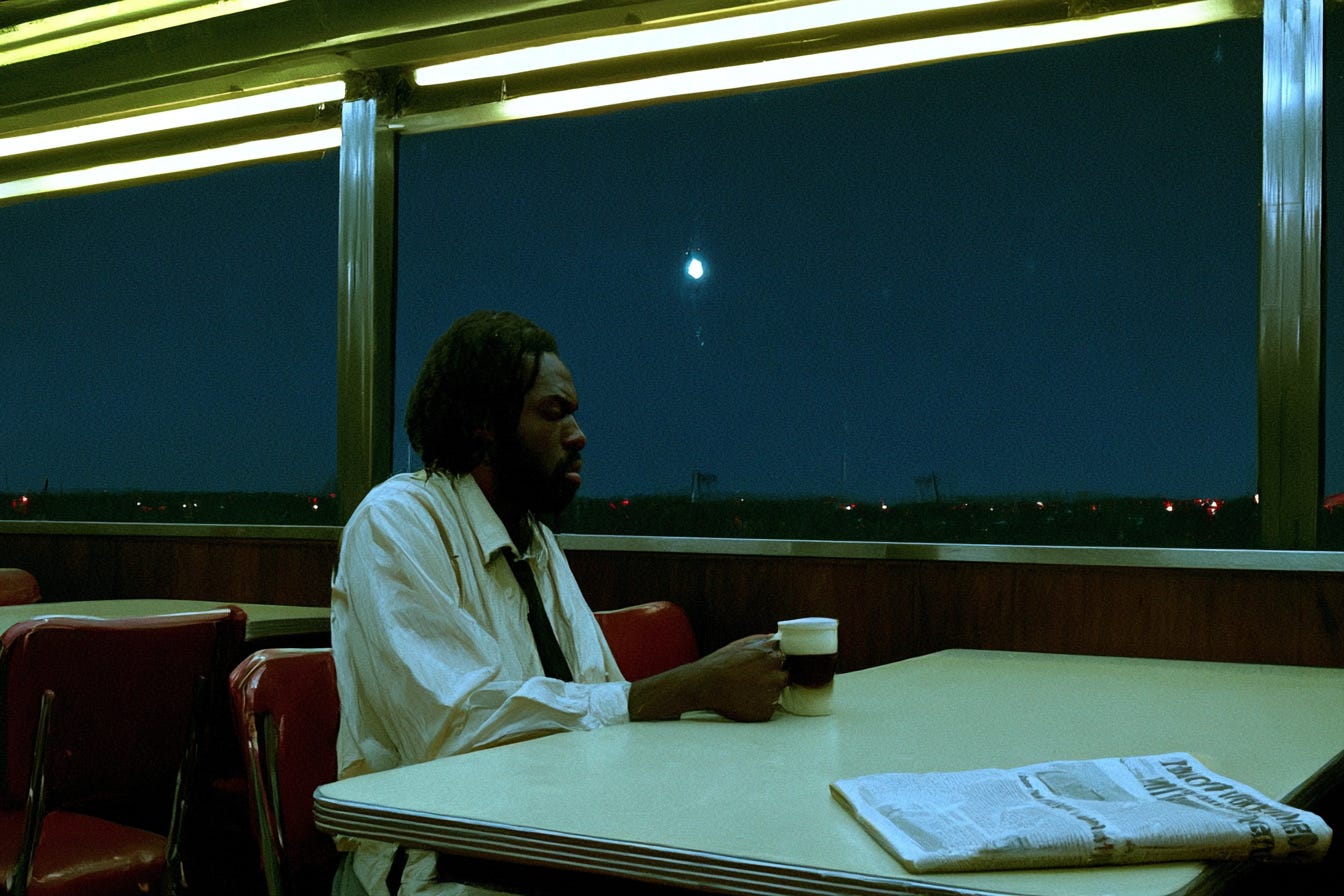
I am not asking you to stand on a corner with a sign. I am not asking you to bring it up at brunch. I am asking for something much smaller and more foundational: stop laughing along when you do not think it is funny. Stop performing skepticism you do not feel because the performance is socially cheaper than the alternative. Stop treating the table’s discomfort as evidence. When someone asks what you think, actually say what you think, with the caveat that the evidence is complicated and the picture is incomplete and you hold it with appropriate uncertainty, all of which is true, and none of which requires you to pretend the evidence is not what it is.
The people who have done the most to move this subject from the margins toward the center, the pilots who filed the reports knowing what it would cost them, the intelligence officers who went to Congress knowing the classification system they were navigating, the researchers who staked professional credibility on testimony the academy did not want to hear, all of them paid a price that most people are unwilling to pay, and the currency they paid it in was the social cost you are currently avoiding at brunch. They are the reason the PURSUE files exist. They are the reason the word “UAP” appears in congressional testimony without audible laughter. They paid down the stigma with their own credibility so that the next person would find it slightly cheaper to be honest, and the debt accumulates, and the only way it gets paid is one person at a time deciding that what they know is worth saying out loud.
You know what you know. The question is whether you know it loud enough to matter, or only loud enough to feel right in the privacy of your own reasoning, which is a comfortable place to be right and a historically useless one.
Stand by what you know. The table will survive it.