


This one is going to be hard to write about seriously, and the difficulty is the reason to try. A story with the word bestiality in it arrives pre-converted into a joke, and the joke is doing work for the people at the center of it. What happened Tuesday in the Senate Judiciary Committee is a recruiting-crisis story and a counterintelligence story, and it was covered almost everywhere as a punchline.
The record runs as follows.
What the memo says
On June 16, the FBI circulated internal guidance to the personnel who vet applicants. CBS News reported its contents on August 28, sourced to multiple people familiar with it. Three changes.
Theft from a previous employer is no longer an automatic disqualifier if it occurred more than three years ago. Paying for sex is no longer an automatic disqualifier if it happened fewer than three times and more than ten years ago, with a carve-out preserving automatic disqualification for applicants who did so while holding a position of trust, defined to include public safety, education, health, social work, finance, and law. And bestiality or animal cruelty moves to case-by-case review if the conduct occurred before the applicant turned eighteen.
The bureau’s own 2023 hiring page listed engagement in prostitution or bestiality among its automatic disqualifiers. The current version of that page contains no reference to either.
What Patel said, and where it fails
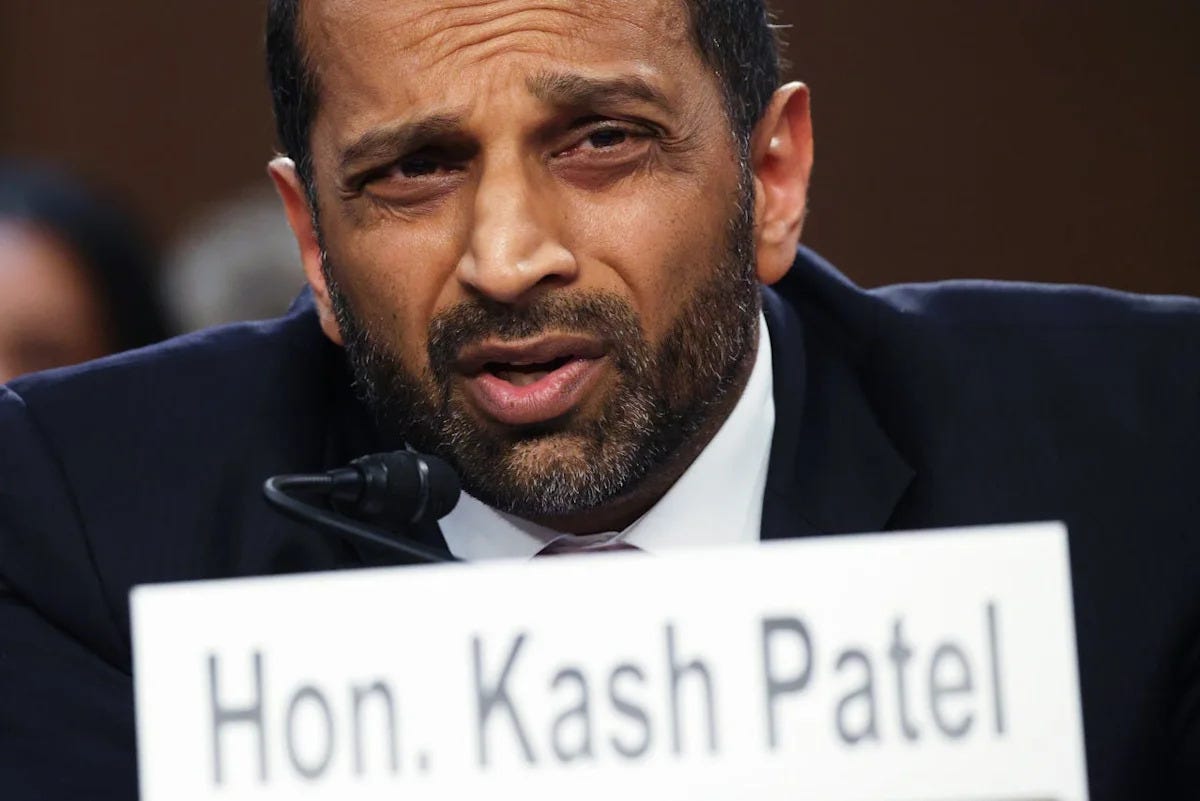
Durbin pressed him on it Tuesday. Patel’s answer was that the change exists to protect victims. “We did not want to punish victims of bestiality, victims who were trafficked,” he told the committee, and he returned to that framing repeatedly across the five hours.
Taken on its own terms, that is a defensible policy goal. A person coerced into sexual contact with an animal as a child is a victim of a crime, and a hiring rule that treats them identically to a perpetrator is a rule worth revisiting. If that were what the memo did, this would be a story about the FBI quietly fixing something.
Two facts stand in the way.
The first comes from the same reporting: sources told CBS News that the new eligibility standard does not distinguish between applicants who were coerced into sexual activity with animals and applicants who engaged in it willingly. The distinction Patel spent Tuesday describing is the one distinction the policy declines to draw.
The second is the cutoff itself. The memo turns on whether the conduct happened before age eighteen. Coercion has no age limit. A rule written to protect trafficking victims would ask whether the person was coerced. This rule asks how old they were, which is a different question with a different set of consequences, and the people it sweeps in are not only the ones in Patel’s description.
There is also a version of this that Patel gave in July, before any of it was public, and it points the other direction. In that interview he said the bureau was not reducing standards and was in fact making them harder to meet. In the same interview he said the FBI was losing too many qualified candidates to the rigors of its requirements. Those two sentences describe opposite policies. The memo, issued a month earlier, implements the second one.
The reason, which nobody disputes
The FBI lost more than a thousand special agents during 2025 alone, through firings, resignations, and retirements, a figure reported by CBS alongside the memo. Losses have continued through 2026. The bureau has been shedding experienced personnel faster than it can replace them, and the replacement pipeline runs through a vetting process built when the FBI could afford to reject nearly everyone.
Mark Zaid, an attorney who represents FBI agents, put the obvious question to CBS: how is this anything other than a recruiting problem. Nobody has offered an answer that doesn’t amount to yes.
That is the actual story. An agency under acute staffing pressure loosened its screening, and its director went before the Senate and described the loosening as an act of compassion toward victims. The compassion framing is a true thing said about a policy that does something broader, offered in place of the thing actually driving it.
The part that got lost
Underneath all of it is a counterintelligence question that the laughter buried.
A retired FBI polygrapher explained to CBS why conduct like soliciting sex workers was traditionally disqualifying, and the reason has nothing to do with morality. It is blackmail. A person with a concealed history of that kind is a person who can be approached, leveraged, and turned, and the whole point of the disqualifier was to keep that vulnerability outside the building rather than inside it. Foreign services do not recruit agents by appealing to their values. They recruit by finding the thing the agent cannot afford to have known.
Current and former bureau personnel raised a second problem to the same outlet: agents who investigate human trafficking testify in court, and defense counsel gets to ask about the background of the witness. A trafficking prosecution is exactly the kind of case that turns on the credibility of the agent on the stand.
Neither of those concerns is partisan, and neither made it into most of the coverage, because the coverage was busy with the exchange in which Senator John Kennedy, a Republican, asked Patel why the bureau was getting into the subject at all.
The exchange everyone watched, and the thing it was actually about
The most circulated moment of the hearing was Cory Booker and Chuck Grassley shouting over each other while the chairman banged the gavel. Grassley, who turns 93 this week, asked the New Jersey senator, “Are you ready to shut up?” Patel told Booker he was the biggest mockery in the Senate. Booker said the bureau has no director, only a lackey, and an incompetent one. C-SPAN posted the clip and it went everywhere.
What Booker was asking about got almost none of that attention.
He was pressing Patel on the bureau’s reported effort to investigate Elizabeth Williamson, the New York Times reporter who wrote about the SWAT detail assigned to Patel’s girlfriend. Booker accused Patel of having told a grand jury that no journalist was under investigation, an accusation Patel did not answer. Booker asked yes-or-no oversight questions, Grassley intervened to give Patel additional time to respond, and Patel went on at length about pursuing leakers of classified information.
That is the allegation, and it should be stated with the appropriate caution: it is a senator’s accusation made in a hearing, not an established finding. What is not in dispute is that Patel declined to answer it, and that the chairman of the committee repeatedly created room for him to decline.
Underneath the volume, Booker’s complaint was narrow and institutional. His argument was that a Senate committee had stopped performing oversight, and that the failure belonged to the members who would not demand answers rather than only to the witness who would not give them. He made it while being gaveled, which is a demonstration of the thesis as much as an argument for it.
What else happened Tuesday
The hearing ran nearly five hours and the hiring standards consumed most of the oxygen. Several other things were said.
Patel confirmed that hundreds of FBI analysts have been assigned to examine election records in Fulton County, Georgia, following the January seizure of ballot boxes and voter rolls from a county election warehouse. He suggested agents could be dispatched to polling places on Election Day, citing Justice Department and White House concerns about voter fraud. Senator Peter Welch asked him to pledge that the bureau would not interfere with voters in November.
That is the FBI, seven weeks before a midterm election, describing a plan to put agents at polling sites, in the same hearing where the news was a memo about animal cruelty. The Dismantling Tracker on this site records that the agency responsible for election infrastructure security lost roughly a third of its staff and went into the last cycle without a confirmed director. The bureau now proposes to fill some of that space with its own personnel, on the theory of fraud that its own director’s boss promotes and that repeated audits have not found.
Senate Judiciary Democrats sent Patel a letter on the eve of the hearing demanding a full accounting of the June memo, including the number of applicants hired, given conditional offers, or placed under case-by-case review since June 16 whose files would previously have triggered automatic disqualification. That number is the one fact that would settle how much of this is theoretical. As of this writing the bureau has not provided it.
Everything above is checkable. The memo is real, the hearing is on video, the attrition figures are reported, and the letter is public. The only thing that required interpretation was deciding not to make it funny.
Looks like they are seeking to recruit psychopathic animal torturers and rapists.
That ridiculous bestialty exception is only there as an intentionally outrageous thing to draw away attention from the fact that he ALSO removed rules around hiring those who've been convicted of stealing from employers, or who have engaged in paying for sexual services!!
The FBI is probably not hiring people who fuck animals, but they are almost certainly hiring thieves and sex offenders, and THAT is what they really don't want the scrutiny about. So they add something utterly ridiculous into the same sentence.
And guess what's everyone's asking him about? 🙄
That silly bestialty shit is a total (and gross) red harring, but it's working exactly as intended…
And while Kash makes a shameless ass of himself defending that crap, the FBI will go right on quietly hiring actual criminals…