


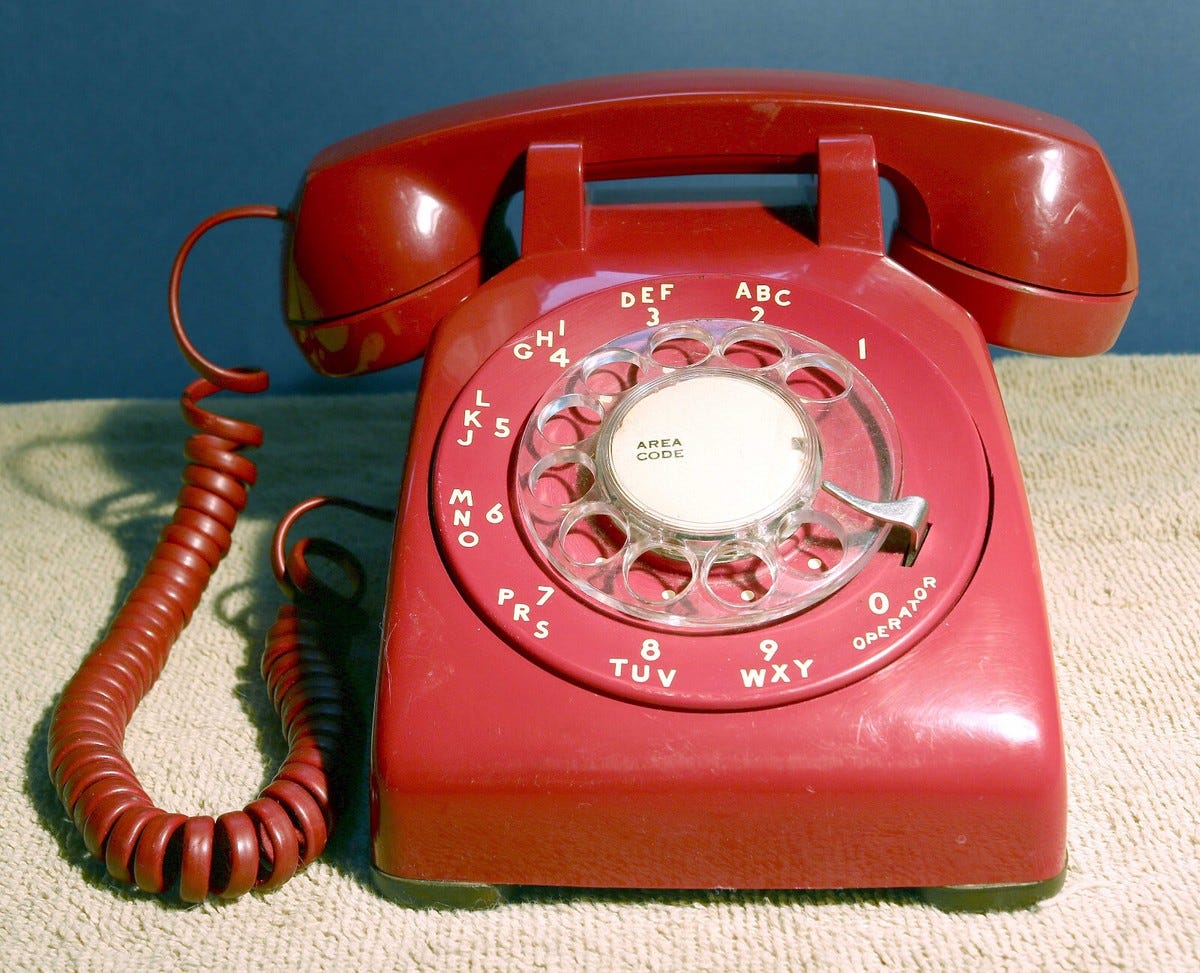
Every other communication technology arrived with instructions. The telephone came with a script. You answered by identifying yourself. You knew the call had begun, and you knew when it ended. Silence on the line meant something had gone wrong. The letter had its own grammar, its salutations and closings, its understanding that a reply might take a week and that this was fine. These rules were taught. Parents drilled them. Etiquette columns policed them. There was a stretch when each device was new enough that people argued openly about how to behave with it.
Texting arrived with nothing.
It took the shape of a phone medium and discarded everything that made the phone legible. What remained was a channel that does the work of four older ones at once, with no way to mark which one is in use. A text can be a letter, expecting no urgent reply. It can be a phone call, demanding one now. It can be a sticky note left on the counter, purely informational. It can be a knock at the door. The sender always knows which he means. The receiver almost never does.
This is where the damage lives. The sender’s clock starts running on phone-call time. The receiver files the message under letter. One waits. One forgets. By evening the sender is assembling a small private case for the prosecution, and the receiver has done nothing wrong except read a different medium than the one that was sent.
The rules never settled because there was no moment to settle them. The telephone spread slowly enough for manners to catch up. Texting went from novelty to infrastructure in a few years, then fractured along every available seam before anyone could standardize a thing. A young person reads a period at the end of a sentence as coldness, maybe anger. An older one reads it as the end of a sentence. Both are fluent. Neither knows he is speaking a dialect, or that the other is speaking a different one.
The ambiguity persists because it is useful. A medium with clear rules would strip away the deniability that everyone quietly depends on. “I didn’t see it” is always in reach. A message left on read can carry a verdict you would never say aloud. The fog is not a flaw in the system. It is the part people would miss most if it cleared.
We built a tool that everyone uses constantly and no one was taught to use. Then we agreed, without ever discussing it, to blame each other for the confusion.
Grab my new book for about the same price as a cup of Starbucks coffee and learn about one of my life’s most significant journeys: https://www.amazon.com/dp/B0H37KYQT3