


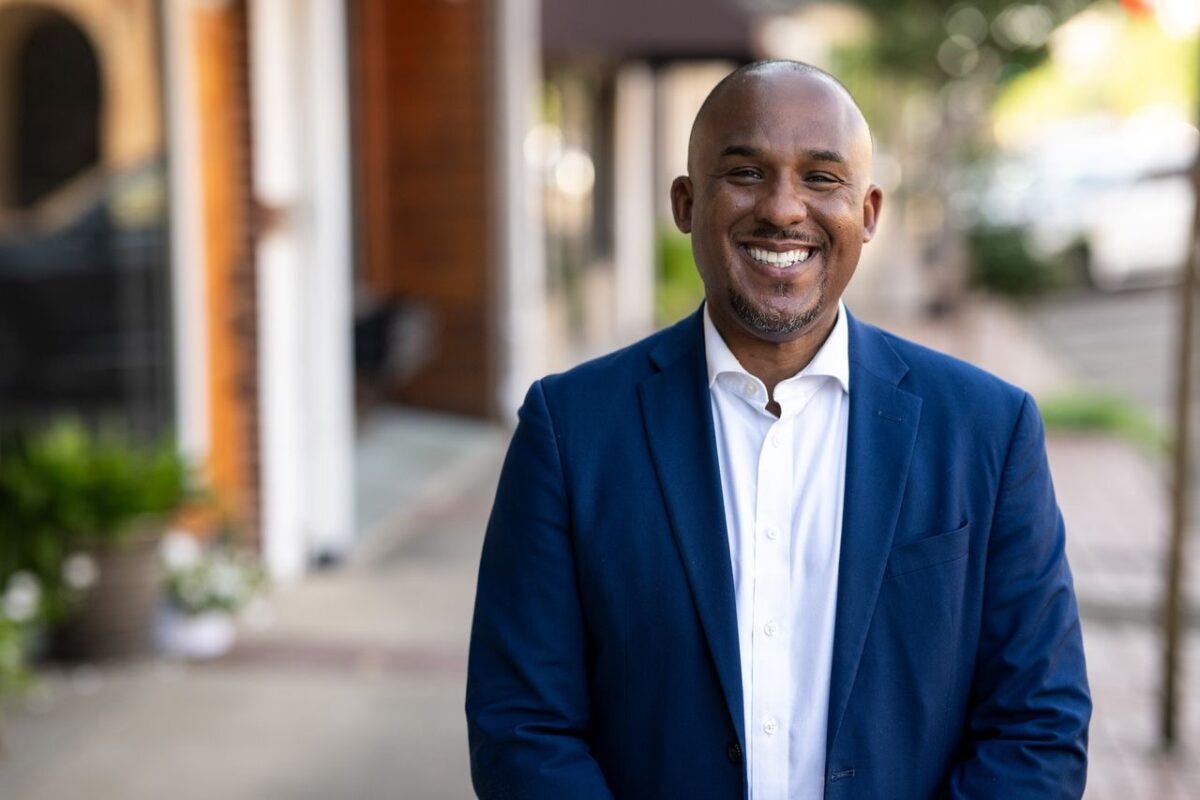
The Associated Press called Mississippi’s Senate race for Scott Colom on Wednesday afternoon, eight days after the polls closed, with 99 percent counted and a lead of about 4,700 votes, 49.2 to 48.7. Cindy Hyde-Smith conceded that evening in a two-minute video: “While this is not the outcome we worked for or hoped for,” she said, “I respect the decision of Mississippi voters.” Her spokesperson said she had called Colom first. It is the eighth Republican Senate seat to flip this cycle. Democrats will hold at least 55, and Alaska, where Peltola’s lead passed 2,500 on Monday, would make it 56.
He is the first Black senator elected from Mississippi since 1874, which is to say since Reconstruction, which is to say since the last time the state’s Black majority was allowed to vote in numbers and before the ninety years that followed, which this publication wrote about on Saturday under the heading of what amnesty costs. Blanche K. Bruce took his seat in 1875. Nobody who looked like him has sat in it since, until January.
The woman he beat. Hyde-Smith was appointed to the seat in 2018 and won it that November after saying, on video, that she’d sit in the front row of “a public hanging” if a supporter invited her, a line she declined to explain in a state with the highest recorded lynching count in the country. In November 2022 President Biden nominated Colom, the district attorney for the 16th Circuit, to a federal judgeship in the Northern District of Mississippi. In April 2023 Hyde-Smith withheld her blue slip, citing among other things his position on transgender rights, and the nomination died. Three years later he ran against her for the thing she’d used to block him, and the voters she’d invoked gave it to him. There is no irony to add. The sequence is the irony.
How close, and how it was decided. On November 4 the margin was 65 votes out of nearly a million. The count then moved into the counties, through the mail ballots postmarked by Election Day and the affidavit ballots, the ones cast by voters whose registration was challenged at the polls and set aside for review. Hinds County, Jackson, accepted 817 and rejected 1,609, by the Mississippi Free Press’s count. Harrison County had 746. Colom’s campaign said Wednesday that he had outperformed his Election Day margin on affidavits and absentees in county after county, and by the time the AP called it, his own tally had the lead at 5,568. That is where the race was won: among the voters the system had flagged, after the polls closed, in the counties where the flagging was heaviest. Readers who followed the Justice Department’s citizenship-list litigation in California this fall can draw the line themselves. The department sued over 20,000 flagged ballots in Los Angeles and lost in three courts. It never filed in Mississippi, where the affidavit pile was the whole election.
Why there was no fight. Mississippi has no recount. None can be requested and no margin triggers one. The state Republican chairman promised last week to “fight like hell,” and the available fights were two: a court challenge to which ballots were counted, or a petition to the Senate itself, which under the Constitution judges its own members’ elections. Election-law scholar Derek Muller laid out both to Time. Neither was filed. Hyde-Smith conceded before certification, which is Friday, and the president, who rallied for her in Jackson in October and carried the state by 23 points two years ago, has not posted about it, which is the second Senate loss this month he’s declined to call stolen. Alaska, at 637 votes, got “the Election is over.” Mississippi, at 4,700, got nothing. The difference is a candidate who read her own numbers.
What it means for the next two years. Fifty-five, or fifty-six, is not sixty, and the filibuster holds, and the October 6 analysis of what a Democratic Congress can and can’t do stands unchanged by the margin: it can refuse money, subpoena, and stop confirmations, and it can’t legislate over a veto. What the extra seats buy is slack. A 51-seat majority loses every vote where one member is sick or bought. A 55-seat majority can lose Fetterman and three more and still confirm nothing the president sends, which, as this publication wrote Tuesday, is the first thing the new Senate will be asked to do when the DeSantis option arrives before January 5. And a 55-seat majority with a Black senator from Mississippi in it holds the Judiciary Committee that will decide, among other things, whether the judgeship Hyde-Smith blocked gets filled by someone she’d have blocked too.
And the thing underneath. Mississippi is 38 percent Black and has not sent a Black person to the Senate in 151 years, through a Reconstruction that was pardoned away, a century of Jim Crow, the Voting Rights Act, and five decades of a majority-white electorate voting as a bloc. Colom won by four thousand votes among a million. The margin is small. The fact is large: the bloc broke, by a little, in the state where it was built, in the year the Justice Department spent trying to find noncitizens on the rolls, and the people who decided it were the ones whose ballots got set aside at the polls and counted eight days later. That is the whole midterm, in one state, in one number, and it’s the one the president hasn’t found a word for.