

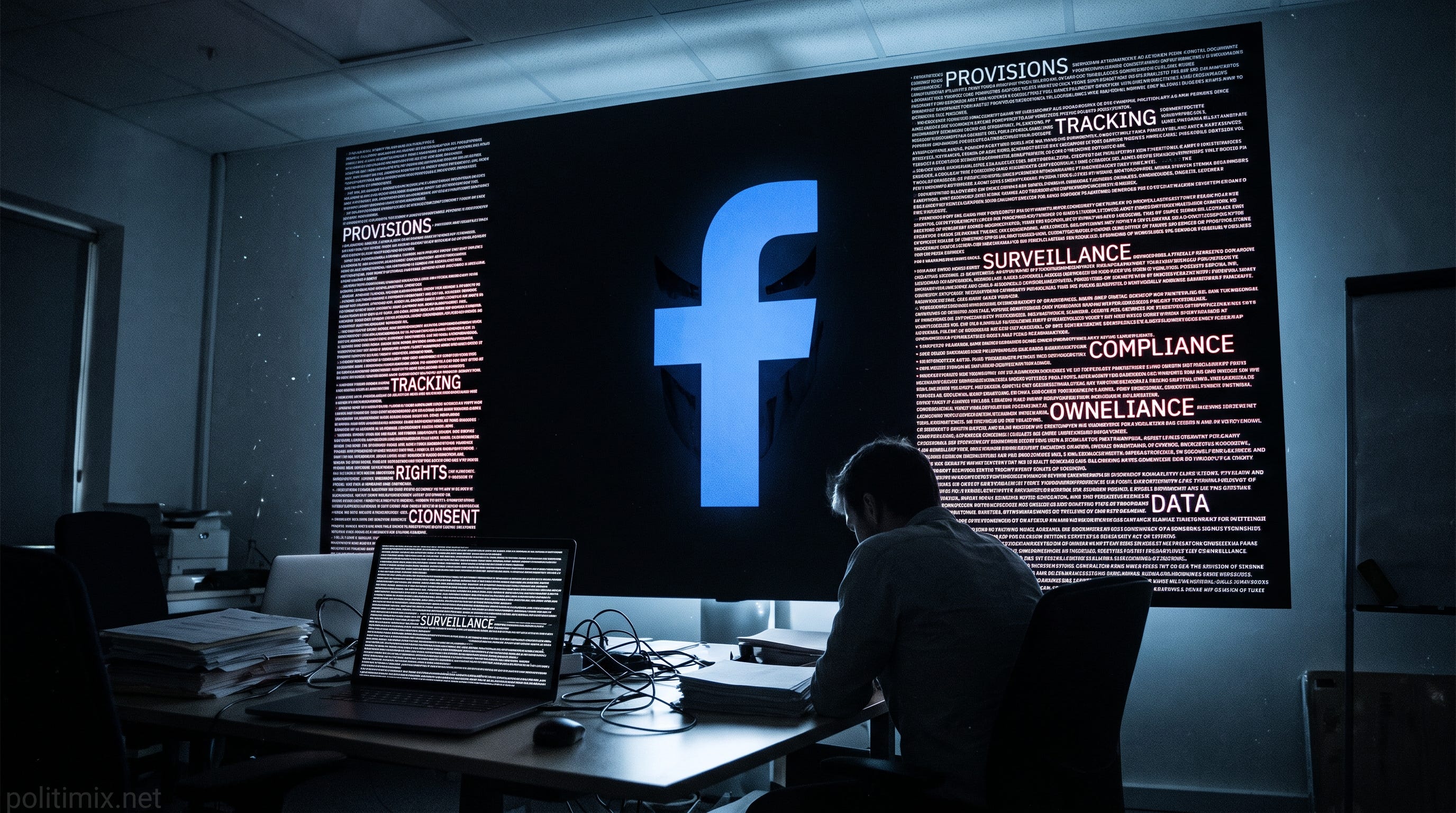
Facebook’s rules don’t live in one place. The Terms of Service point to more than a dozen other documents. I read the main ones: the Terms, the Privacy Policy, the Meta AI Terms, the Avatar Terms and the developer Platform Terms, all listed in Meta’s policy center. Everything in quotes below is Meta’s own wording. I’m not a lawyer, and where I’m reading between the lines I say so. Meta’s AI and avatar features follow you into Instagram and WhatsApp too.
1. Anything you tell Meta AI can be kept, read by a person and used to sell you ads. The Meta AI Terms say Meta reviews your chatbot conversations and that “this review may be automated or manual (human).” Your chats help personalize “your experiences and ads.” Meta warns you: “Do not share information that you don’t want the AIs to use and retain.” Change your mind later and deleting the message, the thread “or even your account may not delete our copy.” People ask chatbots about their health, their marriages and their money. Meta’s position is that they shouldn’t have.
2. Your posts train AI, and not only Meta’s. The Privacy Policy says Meta uses posts, comments and audio that “you or others create or share” to build AI “for Meta Products and for third parties.” The Terms of Service say your content license is “solely” for the purposes in the Terms’ Section 1. Section 1 talks about AI describing photos for blind users and catching abuse. I can’t find where it mentions building models for other companies. The two documents don’t obviously line up, and Meta doesn’t explain the gap.
3. Meta collects data on people who’ve never had an account. Websites and apps send Meta what you browse and buy through tracking tools like the Meta pixel. Stores upload customer email and phone lists to be matched against profiles. The Privacy Policy says Meta gets this “whether or not you’re logged in or have an account.” Staying off Facebook doesn’t keep you out of its files.
4. Meta “never will” sell your data, until Meta gets sold. The Privacy Policy: “We don’t sell any of your information to anyone, and we never will.” The same policy says that if Meta sells all or part of its business, the buyer may get your information. The Terms add that Meta’s rights are “freely assignable” in a merger. The promise lasts until the company changes hands.
5. Meta can use your face, and says it isn’t you. Make an avatar from a selfie and the Avatar Terms give Meta a license to your “image, likeness and other personal characteristics,” passable to others “through multiple tiers” and usable in marketing. The next paragraph says the avatar built from your face “will not, and is not intended to, reflect your Persona.” As I read it, Meta gets your likeness plus a sentence denying it took anything.
6. Deleting your account doesn’t delete your stuff on any schedule you can count on. Deletion takes up to 90 days, then up to another 90 to clear backups. Then come the exceptions. Content stays if someone reshared it and hasn’t deleted it. It stays if deletion isn’t possible “due to technical limitations,” with no deadline. It stays for investigations and government requests, decided “case-by-case.” Meta’s license to use it runs the whole time.
7. If Meta wrongs you, the Terms say the most it owes you is $100. The Terms cap Meta’s liability at “the greater of $100” or what you’ve paid Meta in the past twelve months. Facebook is free, so for nearly everyone the ceiling on paper is $100, whether the harm is a hacked account, a wrongful ban or a leak. Courts and state laws can override a cap like that, which is how Meta came to pay $725 million over Cambridge Analytica. You have to sue in Northern California. Meta, “in its sole discretion,” can sue you in your own country’s courts.
8. Use avatars once and you may have signed away your day in court. The Avatar Terms require private arbitration and ban class actions and jury trials. You can opt out only by mailing a letter to Menlo Park within 30 days of first agreeing to “any version.” Set one up in 2022 and that window closed years ago. You also agree to cover Meta’s legal bills for claims tied to “your use of” avatars, with Meta picking the lawyers.
9. Meta can pull your posts to protect itself, and your profile photo can sell its ads. The Terms let Meta remove content to avoid “adverse legal or regulatory impacts to Meta,” whether or not you broke a rule. You get an appeal, unless Meta decides one might “harm our community of users” or affect “the integrity or operation” of its systems. Lose a Page and its admins are barred from starting another on “the same or similar subject matter.” Separately, Meta can put your name and profile picture next to ads “without any compensation to you.”
10. Asking Meta AI a health question breaks the rules. The Meta AI Terms forbid using it to “solicit professional advice (including but not limited to medical, psychological, financial, or legal advice).” Plenty of people do exactly that, and breaking the terms is grounds for suspension. My reading is that the rule is there to keep Meta off the hook when its bot gets something wrong.
11. Nobody seems to be proofreading. The developer terms, last updated in February, give Meta’s ZIP code as 94205. Menlo Park is 94025. One section still contains unfilled template text: “[TBC] OR [As set out in our applicable agreement(s) with you].” These documents govern the data of billions of people.
What you can do. Treat Meta AI like a stranger taking notes. In Accounts Center, open “Your activity off Meta technologies” and disconnect what’s there. If you’re leaving, download your data first and expect the deletion to take months.
And yet, well meaning but unintelligent people INSIST on posting that viral hogwash saying they don't give Facebook or META permission to use anything they post.
Then they get vexed with me when I point out that all they're doing is spreading the manure in a sandbox where nothing grows.
The bottom line is this: Don't put ANYTHING online that you don't want EVERYBODY to see.