


Begin with the decimal.
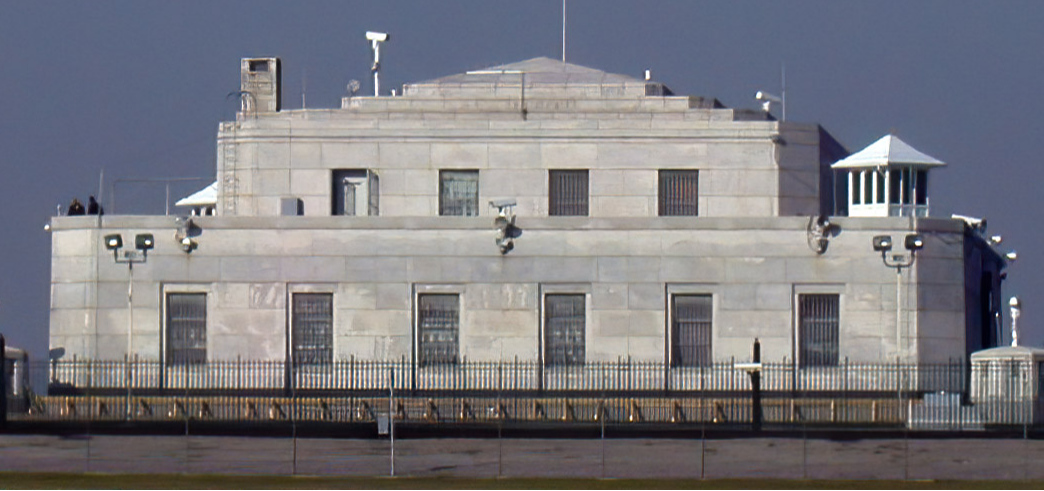
The United States government reports that the Fort Knox Bullion Depository contains 147,341,858.382 fine troy ounces of gold. Not approximately. Not in the neighborhood of. The figure carries three decimal places, which means the Treasury is asserting knowledge of the national gold reserve down to the thousandth of an ounce, a quantity roughly equivalent to a grain of rice.
The last comprehensive independent public audit of that vault was conducted in 1974.
Fifty-two years. Three decimal places. The country has landed on the moon, sequenced a genome, and invented and discarded the compact disc in the interval since anyone last counted the bars, and the ledger has retained a precision that would embarrass a pharmacist.
This is where we begin, because everything that follows is downstream of a government that reports the thousandths and does not check the millions.
The Assurance
On July 14, Treasury Secretary Scott Bessent appeared on Fox News with Jesse Watters and addressed the matter directly.
“The treasurer has been to Fort Knox,” Bessent said, “and I am happy to say all gold is present and accounted for.”
Read that construction again, because it is doing something remarkable. The Secretary of the Treasury of the United States, the official with statutory custody of the national bullion reserve, is confirming the existence of the gold on the grounds that a different person has looked at it. He has not been. The treasurer has been. The treasurer told him.
This is not an audit. This is a man relaying a rumor he finds credible, and the rumor concerns roughly half of the federal gold supply.
He then added that America holds the largest gold reserves in the world, over a trillion dollars at current market value, and confirmed, when asked, that he has never personally visited the depository and has no plans to go. He offered instead to arrange a visit for any senator who requests one.
No senator has requested one.
The Chain of Verification, Traced
Follow the assurance backward and observe what supports it.
Bessent is confident because the treasurer went. The treasurer’s visit, like the 2017 delegation before it, was a visit rather than an inventory, meaning a group of officials entered a building, observed that there was gold in it, and left. The Treasury’s Office of the Inspector General conducts annual reviews, and those reviews reconcile records against records and perform limited sampling of vault compartments, which is a phrase that repays attention. Limited sampling means opening some of the compartments. It does not mean weighing the bars. It does not mean assaying them.
So the structure holds up as follows. The gold is there because the records say so. The records are correct because the audit confirmed them. The audit confirmed them by checking them against the records. And a man who has never been to the building has gone on television to reassure the country on the strength of a colleague’s field trip.
Somewhere at the bottom of this, in 1974, an actual person actually counted something. Everything above that is scaffolding.
The Price of Gold, According to the Law
Now the accounting, which is the part that has been sitting in plain sight for fifty years and which nobody in a position to fix it has considered worth the trouble.
Federal law values the government’s gold at $42.22 per fine troy ounce. This is not a market price. It is a statutory price, fixed in the 1970s, and it remains the number on the government’s books today. Gold currently trades at somewhere around ninety-five times that figure.
The United States Treasury therefore carries an asset on its balance sheet at roughly one percent of its value, by law, on purpose, and has done so continuously through eleven presidential administrations. The books say approximately six billion dollars. The Secretary went on television and said a trillion.
Both numbers are official. Neither is wrong. They are simply produced by two different systems that have never been introduced to one another.
There is something almost restful about a government that cannot agree with itself on the value of the one asset it keeps in a vault with a door weighing more than twenty tons. Everything else in Washington is contested. This is settled, agreed upon, bipartisan, and off by a factor of ninety-five.
The Tour
The Fox News appearance is worth describing in full, because the segment was not a hearing or a briefing. It was a tour.
Bessent walked Watters through a secret 1863 Treasury vault, which is a genuinely interesting piece of architecture. He then displayed, on camera, a supply of one hundred dollar bills bearing Donald Trump’s signature.
The president signed the money. This is a real thing that has happened, and the Secretary of the Treasury presented it to a Fox News host as a point of interest, in the same broadcast in which he explained that he had not been to see the gold.
The segment thus consisted of: a historic vault the public may not enter, currency bearing a personal autograph, and secondhand testimony about a bullion reserve nobody has fully counted since the Nixon administration. It aired as a reassurance.
He also observed, in the course of it, that the dollar “used to be backed by silver, sometimes gold,” which is a description of the American monetary system that would receive partial credit on an undergraduate examination.
The Man Who Started It
The reason any of this required addressing is that the President of the United States raised the possibility that his own government had stolen the gold.
“I wonder if they left the gold in Fort Knox,” Trump said in a May interview, “because they steal a lot.” He followed this days later with a post declaring that it was time to physically audit the depository.
The president suspects a theft. The Treasury Secretary has not been to the scene. The last count was in 1974. A bill to require regular independent audits, the Gold Reserve Transparency Act, was introduced and has not advanced.
Everyone involved agrees the matter should be resolved. Nobody has driven to Kentucky.
Findings
Let me be clear about the actual likelihood, because rigor demands it and because the conspiracy version of this story is both boring and probably false.
The gold is almost certainly there. Moving three hundred sixty-eight thousand gold bars out of a fortified depository without anyone noticing is not a plausible operation, and the tungsten-bar theories that circulate in certain corners require a conspiracy of a size that has never successfully been maintained by anyone. The bars are in the building. That is the boring and correct answer.
Which is precisely what makes the episode worth writing about, because the gold was never the interesting part.
The interesting part is that the United States government has arrived at a place where the appropriate response to a question about a physical object is a televised assurance from a man who has not seen it, resting on a colleague’s visit, backed by an internal review that compares paperwork to paperwork, priced according to a law that is off by two orders of magnitude, and delivered from inside a vault the public cannot enter, next to money the president signed.
Every element of that sentence is a substitution of testimony for verification.
And it is the same substitution the country is being asked to accept everywhere else. The files were released, except for the ones that were miscoded. The senator is fine, here is a photograph. The disclosure is proceeding, on a schedule we control. Trust the assurance. The assurance is what we have instead.
The gold is fine. It is fine in the same way everything is fine now, which is that a person in a suit has said so, and the alternative would involve going to look.
Nobody is going to look.
Outstanding essay.
Anyone of a certain age (at least) reading this can't help but think of...Goldfinger.