


On Tuesday morning, in a Senate Judiciary Committee hearing room, the junior senator from Missouri leaned into his microphone and told the former special counsel of the United States that he had already perjured himself, with the specific confidence of a man who has decided that the evidence in his folder is strong enough that nobody needs to see it, including the witness, and that the correct response to a request to look at the exhibit is to put the exhibit away. The evidence was a handful of text messages. The one that mattered said, “Is 109 Row 1 reserved for Jack?” From this the senator had constructed an Atlanta Hawks game, a trip to Georgia, a secret meeting with Fani Willis the day after her affair became public, and a federal crime. The witness had been in Maryland watching Caitlin Clark.
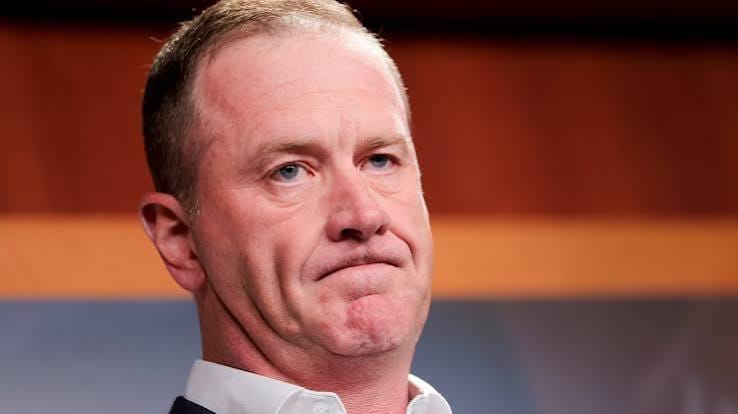
Because Eric Schmitt is never wrong, and by the end of the week this had become the most thoroughly documented fact about him. The sequence, assembled from the Senate record, the Hill, MS NOW, and the senator’s own subsequent appearances, runs as follows. Republican staff on the Judiciary Committee cautioned him before the hearing that the Justice Department texts had not been verified. He used them anyway. He asked Smith whether he had attended “an Atlanta Hawks game on Feb. 3, 2024,” and Smith said he had no recollection of that and had never been to a Hawks game, “I’m sure of that.” Schmitt then announced that he had messages placing Smith at a Warriors-Hawks game in Atlanta the day after the Willis affair surfaced, told him “I don’t think you know that we have this stuff,” and offered him a moment to collect himself “so that you don’t perjure yourself.” Smith asked to see the document, which had been displayed and removed. Schmitt declined to put it back up and said, “I think you’ve already perjured yourself.”
The texts, when the Hill obtained them from the Justice Department, named no team and no city. The one that mattered was the question about a seat. Section 109 at State Farm Arena in Atlanta, as the people who went and checked discovered, letters its rows, so that a Row 1 in that section does not exist. Section 109 at the Xfinity Center in College Park, Maryland, numbers them. On February 3, 2024, in College Park, third-ranked Iowa beat Maryland 93 to 85 in front of a sellout, and Caitlin Clark scored 38 points with 12 assists, and a witness later recalled Jack Smith in the building. In Atlanta that same night, Stephen Curry scored 60 and lost in overtime, which means the senator had, with no evidence, placed the special counsel at the wrong historic basketball game of the evening, 640 miles from the right one. Senator Klobuchar raised the Hawkeyes possibility in the room, and added that people “should have their facts straight before they accuse someone of being a dirtbag.” Schmitt’s answer was “I stand by that statement.”
Then came the defense, which is the part that earns the title. On X that afternoon: “Who knew Jack Smith was a Caitlin Clark fan?” To TMZ: “the only NBA game that was going on that night was in Atlanta,” and “Jack Smith is not credible.” On the Charlie Kirk Show, with the goalposts now on wheels, it became “the only NBA or NCAA men’s game going on at that time in Atlanta,” a formulation that excludes women’s basketball from the category of basketball in order to exclude the game the man actually attended. Asked whether the whole thing had been a mistake, per the Washington Examiner: “Not a mistake.” And, confronted with the correction: “I presented him with text messages about him wanting to meet with people!” He had. The people were in Maryland. Claire McCaskill, who held the seat before him, posted “Quit blaming his staff,” followed by the observation that no real senator would present that information without checking it, which is both an accusation and, given the warning from his own party’s committee staff, a generous one. He has not apologized. His office did not answer the question of whether he intends to.
A scholar of this discipline notes that none of this was new behavior, and that the senator arrived at the hearing with a decade of practice. The inventory, in reverse order.
The censorship case. As Missouri’s attorney general he filed Missouri v. Biden, the suit alleging that the federal government had coerced social media companies into suppressing conservative speech, won a sweeping injunction from a district judge on the Fourth of July 2023, deposed Anthony Fauci, and rode the case into the Senate. In June 2024 the Supreme Court threw it out, 6 to 3, for lack of standing, in an opinion by Justice Barrett that found the plaintiffs could not show the government had caused the harms they described. Schmitt’s statement that day opened with “While this isn’t the outcome we were hoping for” and arrived, two sentences later, at “a huge win for Americans.” The case had “broke the dam wide open.” A man who has lost a Supreme Court case by three votes and announces a huge win is practicing for the day he will lose a basketball argument and announce that he stands by it.
The masks. In January 2022 Schmitt sued 47 Missouri school districts for requiring masks, after sending letters to all of them asserting that a Cole County ruling had made their rules illegal, a reading of the ruling that the districts’ lawyers disputed at the time and that his own state health department’s unreleased analysis, which found the mandates reduced infections, did nothing to support. Nearly all of the suits died as the mandates lapsed. The one that reached a judgment, in Jackson County, ended in May 2023 with Judge Marco Roldan finding that there was “no Missouri law allowing the attorney general to involve himself” in how a school district manages a disease, and that the attorney general “had no authority even to issue an opinion” on the question, which is a court telling a lawyer that the defect was his presence rather than his argument. By then Schmitt was in the Senate. His successor let the deadline to appeal pass.
The election. In December 2020 Schmitt led seventeen states in a brief supporting Texas’s attempt to have the Supreme Court throw out the results in Georgia, Michigan, Wisconsin, and Pennsylvania, on the grounds, as he put it, that “the integrity of our elections is of critical importance to maintaining our republic.” The Court dismissed it two days after Missouri’s brief arrived, unsigned, for lack of standing. The claims in it had already been rejected in every state and federal court that heard them. No retraction has ever been issued, no acknowledgment made, and the senator has gone on to describe himself as a defender of election integrity in every campaign since, which is the kind of consistency available only to a man who does not keep score.
Which brings the inventory to the two entries where the register changes, because the cost of never being wrong stopped being paid by the senator.
Kevin Strickland. In 1979 a Kansas City jury convicted him of a triple murder on the testimony of one eyewitness, who spent the rest of her life trying to take it back. By 2021 the Jackson County prosecutor, the one whose office had convicted him, had concluded he was innocent and asked a court to free him. The attorney general’s office under Eric Schmitt opposed it. Its filings said Strickland “was fairly tried and convicted” and had “worked to evade responsibility for the murders” for four decades. At the hearing his lawyers argued the recantations were hearsay, suggested the witness’s email to the Innocence Project was fabricated, and tried to have the entire Jackson County bench disqualified. A retired appeals judge, James Welsh, found the recantations “numerous and consistent” and ruled the conviction “cannot stand.” Strickland walked out on November 23, 2021, after 43 years, the longest wrongful imprisonment in Missouri’s history, ineligible for state compensation because his exoneration involved no DNA. The attorney general’s office issued a statement. “In this case, we defended the rule of law,” it began, and it ended: “The court has spoken; no further action will be taken in this matter.” Nowhere in it is the word innocent, or the word sorry, or the number 43.
Lamar Johnson. Convicted in 1995 of a St. Louis murder; the Circuit Attorney’s conviction integrity unit found in 2019 that the case against him had been built on a witness paid $4,000 in undisclosed living expenses and a confession from the actual killers that nobody had wanted to hear. Schmitt’s office fought the review for three years, first by arguing the prosecutor had no legal authority to seek it, and then, after the legislature wrote a law giving her that authority, by assigning four attorneys to argue at the hearing that Johnson was guilty anyway. The Missouri Independent’s account of that hearing describes an office that objected to everything, including, at one point, the proposition that a killing had occurred on the date everyone agreed it had. A former justice of the state supreme court called the effort “more ideological than real.” Johnson was freed on February 14, 2023, after 28 years, by a judge who found clear and convincing evidence of his innocence, six weeks after Schmitt left for Washington and the office he built kept arguing without him. An Injustice Watch review found the Missouri attorney general’s office had “opposed calls for relief in nearly every wrongful conviction case” vacated since 2000. In the decade before that review, more than ten Missouri convictions were vacated, and the office opposed relief in each one.
The scholar’s closing note is about what the job is now. Eric Schmitt sits on the Senate Judiciary Committee, which confirms every federal judge and every United States attorney, and which this week was asked to evaluate the credibility of a prosecutor on the strength of a text about a seat. The senator who could not be wrong about a basketball game is the same lawyer who could not be wrong about a mask letter, an election brief, a Supreme Court loss, or two men his own state’s prosecutors said were innocent, and in every case the method was identical: assert, lose, restate the assertion as the outcome. Jack Smith lost an afternoon to it. Kevin Strickland and Lamar Johnson lost 71 years between them to the version of it that had the power of the state behind it, and the office that spent those years arguing they were guilty has never once said it was wrong, because it is run, and was run, and will apparently always be run, by men who have decided that being wrong is a thing that happens to witnesses.
This absolutism is a serious problem. It's embodied by too many conservatives and too many evangelicals. "The Bible is infallible." "I am never wrong." "I have a position and I am never going to move from it." These statements don't describe strength of character. They describe an unwillingness to acknowledge or accept new information, and an unwillingness to change one's thinking because of new information. That means that person will never learn or grow.
Add Eric Schmidt to the list of people who need a new job.