


Start with the number that matters most, because it is the one that gets quoted least. China has the capacity to build roughly 55 million vehicles a year. Its domestic market buys about 23 million. Everything else has to go somewhere, and the somewhere is the rest of the world, at whatever price clears the inventory. That single ratio explains more about the next decade of the auto industry than any tariff schedule, and it is the reason the question "how big a threat is China" has a different answer depending on which market you are standing in.
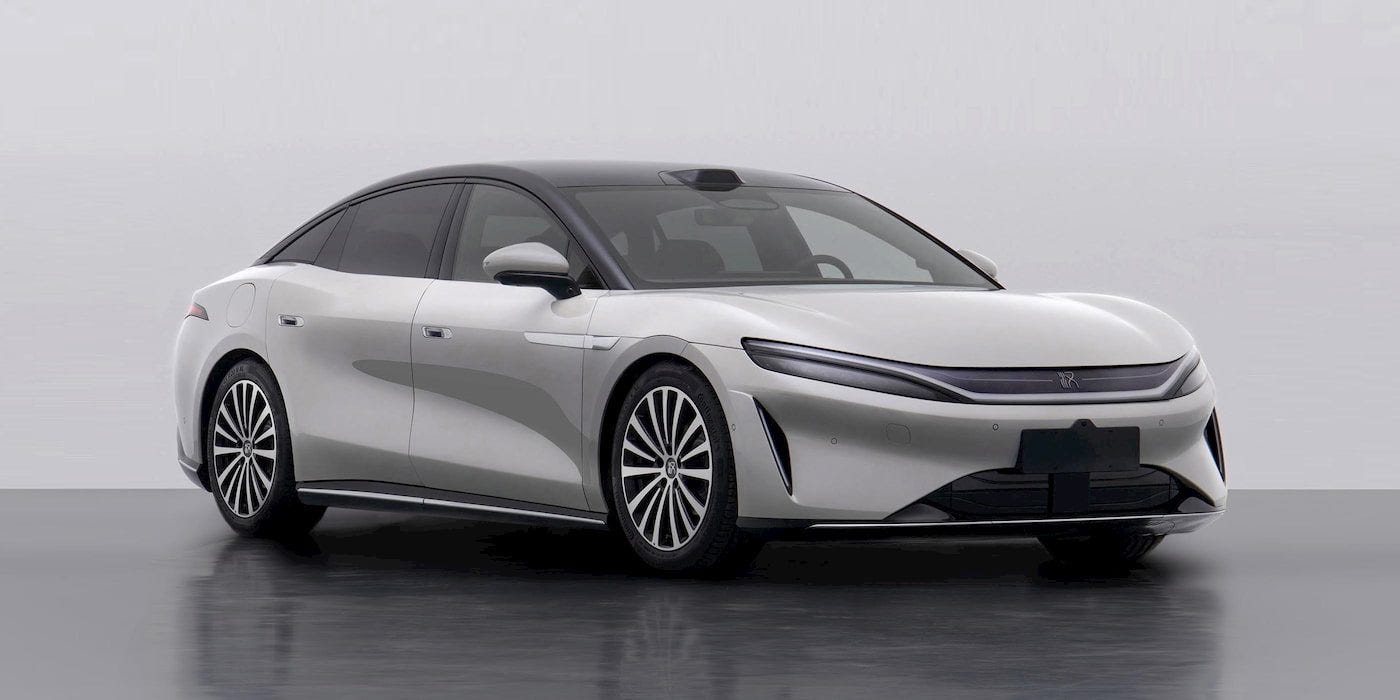
Inside the United States, the honest answer is: for now, contained. Chinese-built electric vehicles face a 100 percent Section 301 tariff, and separately, a Commerce Department rule finalized in January 2025 prohibits Chinese-developed software in connected vehicles starting with model year 2027 and Chinese hardware starting with model year 2030. The second measure is the one that actually closes the door. A tariff can be absorbed, and Chinese automakers have absorbed steep ones in Europe while still pricing under the locals. A rule that says the car’s operating system cannot come from China at all is a wall rather than a toll. Between the two, a BYD showroom in Ohio is not a near-term scenario, regardless of what happens to gas prices or the midterms.
Outside the United States, the answer is that the fight is already mostly over and the Americans were not in it. BYD delivered just over 700,000 vehicles in the first quarter of this year, with overseas shipments up more than 50 percent and now accounting for roughly 45 percent of its total. It is targeting 1.5 million foreign sales for the year. Chinese brands took more than 10 percent of Europe’s EV market in 2025 despite tariffs that ran as high as 45.3 percent, and Brussels has since moved to replace those tariffs with a negotiated minimum-price system, an admission that the tariffs slowed nothing. BYD’s plant in Debrecen, Hungary, opened early this year, which means the next wave of BYDs sold in Europe will be European-built and tariff-proof. In Southeast Asia, Latin America, and the Middle East, the story is the same with smaller numbers. The markets where Ford, GM, Hyundai, and Volkswagen expected to sell electric cars for the next twenty years are being repriced from underneath, and the American tariff wall does not extend to a single one of them.
The counterintuitive part is that this is happening while the Chinese industry is bleeding. BYD’s net income fell 55 percent in the first quarter, its fourth consecutive quarterly decline, because the domestic price war has become self-consuming. Beijing’s own regulators spent most of last year telling automakers to stop cutting prices, borrowing Premier Li Qiang’s language about “involutionary” competition, and BYD responded in March by pushing average discounts to around 10 percent across its lineup, a two-year peak. This cuts in two directions at once. A BYD with collapsing margins is a weaker company than the one Western executives were panicking about in 2024. It is also a company with every incentive to move surplus cars into any foreign market that will take them, at any margin above zero, because the alternative is idle capacity in a country that has already built too much of it.
So: how are the cars so cheap, and what is being cut to get there? The best public accounting comes from the Rhodium Group, which compared BYD, Geely, and Leapmotor against Tesla’s Chinese operation, a fair comparison because it removes labor costs and shipping from the equation entirely. Their estimate is that BYD builds a car for about $4,700 less than Tesla builds a Model 3 in Shanghai, roughly 15 percent of the Model 3’s price. The breakdown is the interesting part. Direct government grants account for about $292 per vehicle, which is 5 percent of the gap. The biggest single factor is vertical integration: BYD makes about 80 percent of its top-tier components in-house, against 37 percent for Tesla, and that eliminates roughly $2,369 per vehicle in supplier markups. Lower overhead, meaning cheaper engineering talent and administrative cost spread across enormous volume, accounts for another $1,719. And BYD pays its suppliers on 155-day terms, against Tesla’s 60, which is worth about $214 per car in float. When people say the Chinese advantage is subsidies, the per-vehicle number says otherwise. When people say it is slave wages, the Tesla Shanghai comparison says otherwise too. The advantage is mostly that BYD decided, twenty years ago, to make its own batteries, its own motors, its own power electronics, and its own semiconductors, and Western automakers decided the opposite.
That does not mean nothing is being cut. Three things are, and it is worth being precise about which ones would follow a Chinese car to an American driveway and which would not.
The first is the supplier base, which is being squeezed in a way that eventually shows up in parts quality. Those 155-day payment terms are a form of borrowing from companies too small to refuse. It got bad enough that Chinese regulators forced the major automakers to publicly pledge 60-day terms last year. A supplier that has been waiting five months to be paid for the last batch is a supplier with a strong incentive to shave cost on the next one, and that pressure is invisible in a showroom and very visible five years later.
The second is speed outrunning safety regulation, and here the evidence is concrete rather than theoretical. In October 2025, a Xiaomi SU7 crashed in Chengdu, the collision shorted the high-voltage battery into the low-voltage system, the electronic door releases died, and bystanders could not get the driver out before the fire killed him. The SU7 had no external mechanical handle; its manual release was inside a storage compartment in the door. Xiaomi had already recalled nearly 117,000 SU7s after an earlier fatal crash, and by February faced pressure to recall 370,000 more over the handles. China’s industry ministry responded in January with a mandate that every vehicle have mechanical door releases inside and out that work without power, new models by 2027, existing ones by 2029. Roughly 60 percent of China’s bestselling EVs had adopted flush electronic handles by then. The fairness point cuts against Detroit’s preferred version of this story: Tesla popularized the flush handle and faced its own U.S. safety probe over it last year, so this is the failure of an industry sprinting rather than a uniquely Chinese defect. The sprint is simply faster in China, the regulator further behind, and the correction came after people died.
The third is the one the tariff debate mostly ignores: the corner being cut is on the state’s side, and it runs through the whole structure. The $292 per car in grants is the visible piece. The invisible piece is two decades of a protected home market that required foreign automakers to hand over technology through joint ventures, cheap state credit, subsidized land, and a domestic battery supply chain built with policy rather than markets. And in July 2025, having built that chain, Beijing put lithium iron phosphate cathode technology and lithium-processing know-how under export control, meaning the technology BYD used to get cheap now requires a license to leave the country. China got here by running a forty-year industrial policy and then locking the door behind it, which is a different thing from cutting corners and a much harder one to answer.
That is also the frame for the question of what a buyer actually risks in a Chinese-made car, because the answer has a security half and a practical half, and the second one gets less attention than it deserves.
The security half is real and, so far, hypothetical. A modern connected car collects location, driving behavior, cabin audio, camera and lidar feeds, and whatever it can pull from a synced phone. China’s 2017 National Intelligence Law obliges Chinese companies to cooperate with state intelligence work on request, and nothing in a BYD’s terms of service overrides that. The remote-disable capability is not speculative either: when Russian forces looted John Deere equipment from a Ukrainian dealership in 2022, Deere bricked it from Illinois. No documented case exists of the Chinese government pulling data from a car abroad, and it is worth saying so plainly. But the best evidence that the concern is serious comes from Beijing itself, which has for years barred Teslas from sensitive government sites and military zones over exactly this worry. The United Kingdom has now banned Chinese EVs from military installations, and Poland is preparing to do the same. When a country restricts a product for its own security, and then objects when others restrict the same product for theirs, the objection is not an argument.
The practical half is less dramatic and more likely to actually cost a buyer money. A car is a fifteen-year relationship with a parts network, a software update pipeline, and a dealer who can diagnose it. Chinese brands entering a new market have none of those at scale on day one, and the ones that lose the price war at home, which will be most of them, will not be maintaining servers for orphaned cars abroad. The Commerce rule adds a second layer: any Chinese-linked connected car in the U.S. after 2027 would be on a regulatory clock its owner did not set. A buyer in Europe or Mexico can reasonably conclude the discount is worth it. A buyer in the United States mostly cannot get the car, and the few gray-market paths that exist lead to a vehicle nobody is obligated to support.
Which leaves the question of what to do, and here it helps to give the wall its due before taking it apart. The case for the 100 percent tariff is not stupid. Autos are a strategic sector with a supply chain that doubles as a defense industrial base. China’s own market was closed to foreign automakers without a joint venture for decades, so reciprocity is a defensible principle. And the overcapacity math above means Chinese cars would arrive not at a fair price but at a dumping price set by a state that needs the inventory gone. Letting that flood in unfiltered would amount to a transfer of Beijing’s industrial policy costs onto Detroit’s balance sheet, with free trade as the label on the box.
The problem is what the wall does when it is the only policy. It protects American automakers from the one competitor that could force them to learn how BYD builds a car, while the rest of the world learns that lesson at BYD’s price. It does this in a year when the federal EV purchase credit expired, on September 30, 2025, removing the only demand-side lever that was pulling U.S. production costs down through volume. And it now sits alongside a president who told Fox News on September 12 that he would be fine with China opening a plant here as long as it hired American workers, while the Alliance for Automotive Innovation, Detroit’s own lobby, asked Congress the same month for a permanent ban on the sale, import, and manufacture of Chinese connected vehicles. The administration and the industry are pointing in opposite directions, and neither direction includes a plan for the cost gap.
Four things would. The first is to keep the security fence and the price fence separate, because they are defensible for different reasons and on different timelines. The Commerce connected-vehicle rule stands on its own: it bans the software and the sensors and leaves the sheet metal alone, and it should be permanent. The tariff buys time, and time only has value if someone is using it, so it should come with a clock and a condition, the way the 1980s Japanese export restraints came with the understanding that Toyota and Honda would build in Ohio and Kentucky, which they did, with American workers, and which is why nobody now thinks of a Camry as a foreign car.
The second is to run that Japanese playbook in reverse, on purpose rather than by presidential aside. A Chinese plant in the U.S. that runs on American-developed software, meets the Commerce rule, sources batteries domestically, and carries a U.S. ownership stake is a different object from a BYD shipped from Shenzhen. Trump’s Fox comment gestured at this. Congress could write it as a framework instead of leaving it as a mood.
The third is to license the technology in while the window is open. Ford’s BlueOval Battery Park in Marshall, Michigan, is a $3 billion plant that will be the first in the country to make automotive-grade lithium iron phosphate cells, built on a licensing deal with CATL, Ford-owned and Ford-operated, supporting 1,700 jobs. It drew Republican fire for the CATL connection and survived only because it broke ground before the tax-credit cutoff. That is precisely the kind of deal Beijing’s July 2025 export controls are designed to prevent in future, which is the strongest possible signal that it was the right kind of deal to make.
The fourth is the uncomfortable one, because it is the only one that actually closes the gap. The Rhodium numbers say 95 percent of BYD’s cost advantage comes from choices, not checks: build the components yourself, run fewer platforms at higher volume, put engineers to work at a cost the enterprise can carry, and pay attention to the boring parts of a car. None of that requires a subsidy to copy and none of it can be legislated from Washington. It requires American automakers to spend the years the tariff is buying them on becoming a company that can build a good car for $25,000, which is a thing they last did in the 1990s and have spent every quarter since explaining why the market no longer wants.
The Chinese threat, then, is smaller in the U.S. than the alarm suggests and larger everywhere else than the tariff can reach. It rests on an advantage that is mostly earned and partly rigged, achieved by a state that built the industry with policy and is now using policy to keep the know-how home. The corners cut are real but visible, and the worst of them have already killed people and forced the regulator’s hand. The wall is worth keeping for security reasons that stand on their own. But a wall with no plan behind it protects one thing only: the comfort of never having to find out how the other side built the car. American workers, American buyers, and the American industrial base all end up on the far side of it, with everyone else.
I spent last winter in Panama City (an escape from Canadian winter) - almost every car on the Road there, and all but a handful of uber rides (out of hundreds) were Chinese vehicles - Geely, BVD, Jetour. Interestingly the majority of the Chinese Fleet in Panama were petrol.